Last updated November 21, 2026
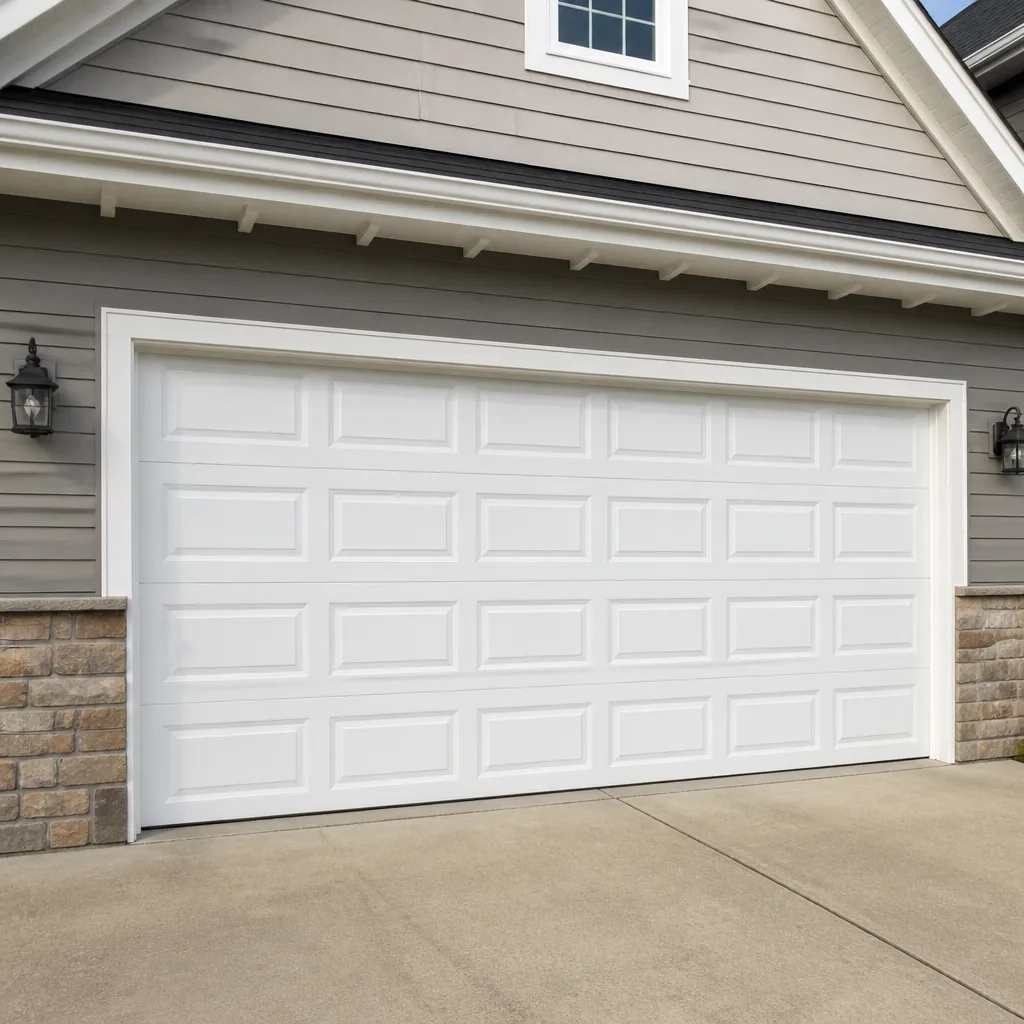 Raised-panel steel
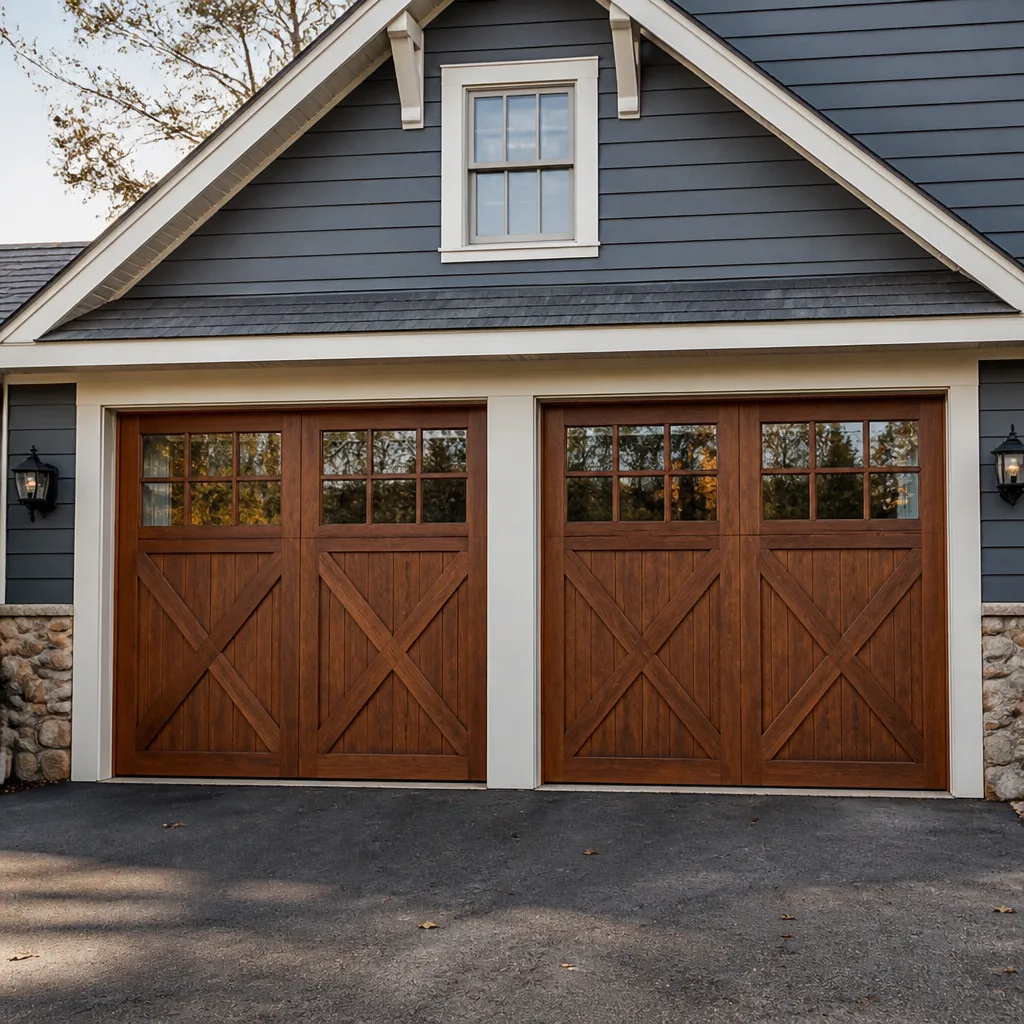 Carriage house
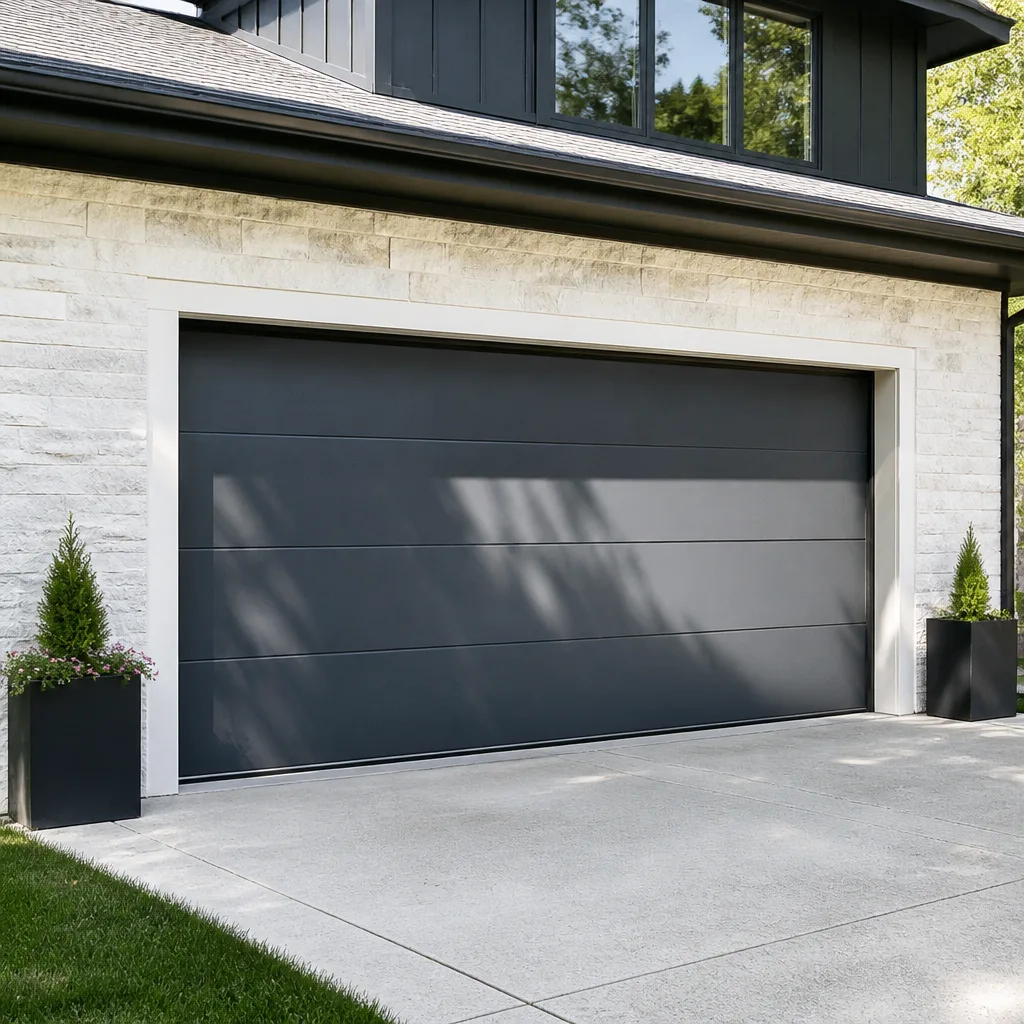 Modern flush
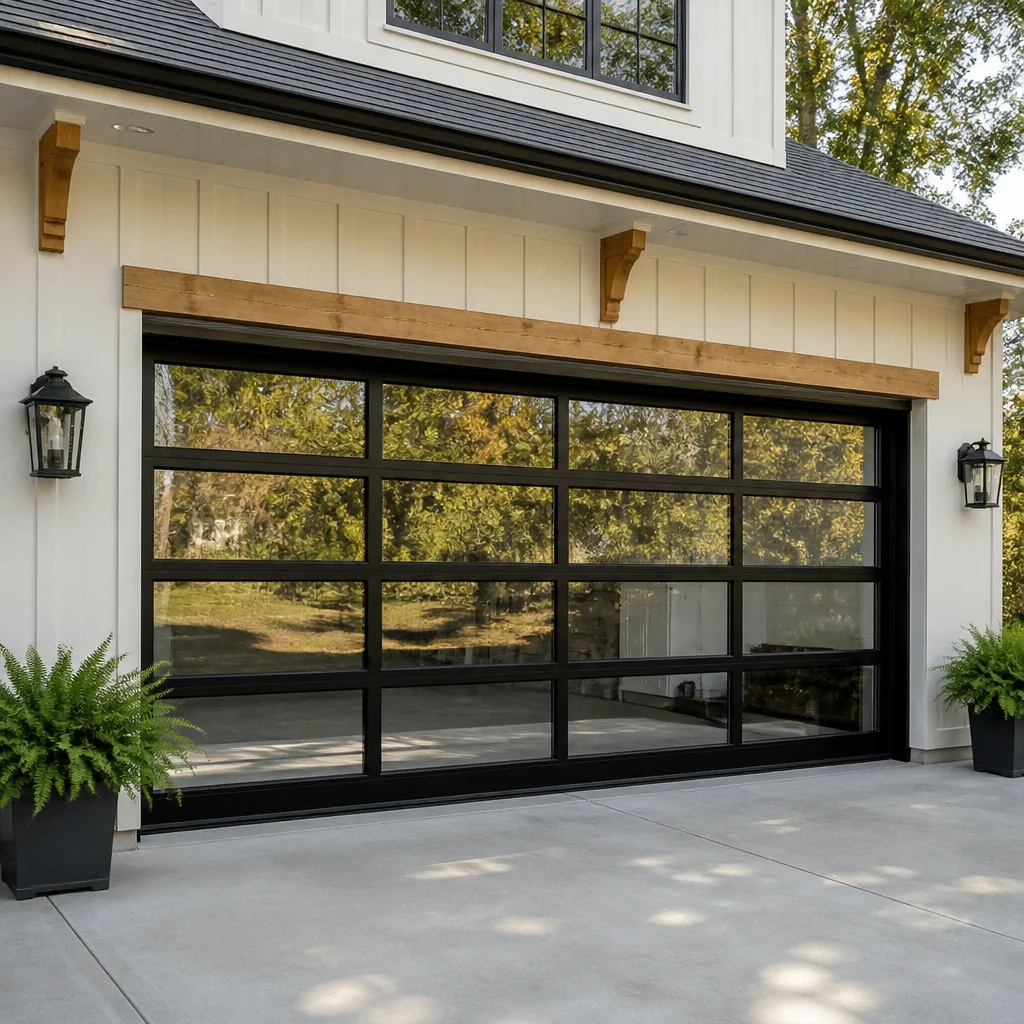 Full-view glass
 LiftMaster openers
 Chamberlain openers
Full 25-point door and opener safety check with every visit - springs, cables, rollers, tracks, and your LiftMaster or Chamberlain opener included
You get a price before we start. It does not change when the pro arrives.
Get your free estimateThe Complete Guide to Garage Doors in Wilmington
Most Wilmington homes built before 1980 don’t have the standard 16-by-7 rough opening that manufacturers print in their catalogs. The garages are too narrow, the headroom is too low, or the walls are masonry instead of framed lumber. That one detail explains a great deal about garage door work in this city: a job that looks like a two-hour swap in a brochure can turn into a full day once the opening is measured. This guide walks through what actually matters here – how older housing stock changes your options, which materials survive the freeze-thaw cycle, which brands a local supplier can get in a week, and how alley-access garages need different hardware than suburban front-loaders.
Quick Answer
Garage door decisions in Wilmington depend on your home’s age and lot layout before they depend on brand. Pre-1970 garages, especially rowhouse and alley-access builds, usually need custom sizing and different spring and track setups than newer suburban doors. Match the material and insulation to a climate zone 5A freeze-thaw cycle, confirm rough opening measurements before ordering anything, and choose an opener system that a local technician can actually service.
Styles & brands we work with
- Raised-panel steel
- Carriage house
- Modern flush
- Full-view glass
- LiftMaster openers
- Chamberlain openers
Table of Contents
- How Wilmington’s Housing Stock Shapes Your Garage Door Options
- Which Garage Door Materials Hold Up in Wilmington’s Weather
- The Freeze-Thaw Cycle and the Delaware River
- Brand Availability: What’s Local and What Isn’t
- Alley-Access Garages vs. Suburban Front-Facing Doors
- Insulation and R-Value: What’s Worth Paying For
- Choosing an Opener System for a Wilmington Garage
- Repair or Replace? An Honest Decision Framework
- Safety: Springs, Cables, and What Not to Touch
How Wilmington’s Housing Stock Shapes Your Garage Door Options
Wilmington is a city where three distinct eras of housing sit within a few minutes of each other. Pre-1970 rowhouses and older detached garages line the blocks closer to the city center. Mid-century builds filled in during the 1950s and 1960s. Then the suburban developments from the late 1980s and 1990s brought wider lots, attached garages, and standard rough openings.
Those older rowhouse garages are where most surprises happen. Rough openings on these homes often run narrower than today’s catalog standard, and headroom above the door can fall short of what a torsion-spring system needs. Some were built for single wooden doors that were replaced decades ago and never properly reframed. When a replacement door arrives oversized for the opening, the installer either sends it back or spends hours reworking trim and tracks.
What does that mean for you? Before you order anything, have the opening measured. Not just the width and height of the door, but the side room between the opening and the wall, and the headroom above the top of the door. On pre-1970 homes in Wilmington those three measurements frequently fall outside standard specs, and no catalog listing will tell you that.
Newer suburban builds in the 1990s developments are far more predictable. They typically meet standard 16-by-7 or 8-by-7 dimensions and use framed two-by walls around the opening, which makes replacement and opener installation simpler.
- Pre-1970 rowhouse garages: measure carefully, expect custom sizing, confirm headroom for torsion springs.
- 1950s and 1960s builds: a mix; sometimes standard, sometimes not, always worth verifying.
- 1990s suburban builds: mostly standard openings, straightforward replacements.
Which Garage Door Materials Hold Up in Wilmington’s Weather
Wilmington sits in a transitional Mid-Atlantic climate, which means a door here sees cold, wet winters and hot, humid summers. That combination narrows the field of materials that make sense long-term. Steel dominates for good reason, but what’s underneath the steel skin matters as much as the skin itself.
Here’s how the four common door materials play out locally:
- Insulated steel: the practical default for Wilmington homes. Steel resists the moisture swings of a Mid-Atlantic year, and the factory insulation inside handles the coupling of cold winters and hot summers. Look for a two-sided steel door with a continuous polyurethane core; single-sided steel doors dent more readily and offer little thermal value.
- Aluminum: lighter than steel and won’t rust, which is why full-view aluminum doors with glass panels are popular on modern builds. It dents more easily than steel, so it’s a poor choice for a door facing a busy alley or driveway where kids and bikes roll through.
- Wood and wood-composite: handsome on older Wilmington homes where a natural timber look matches the architecture. Real wood needs paint or stain upkeep every few years in this climate, and the moisture swings are hard on joints. Composite wood-look doors cut the maintenance considerably.
- Fiberglass and vinyl: affordable and won’t rust, but they tend to look dated faster and hold up less well to repeated freezing and thawing than a steel door will.
For most Wilmington homes, an insulated steel door is the sensible answer. It handles the climate, tolerates a few dings, and doesn’t need refinishing. If a specific house calls for the look of wood, a composite door gets you the appearance with far less upkeep.
The Freeze-Thaw Cycle and the Delaware River
A Wilmington winter rarely produces a single deep freeze. It produces a pattern: cold nights, warmer afternoons, cold again. That repeated cycle is harder on a garage door than constant cold would be. Metal expands and contracts with each swing, and the hardware that holds everything together works loose over a few seasons.
You’ll notice the consequences in a few places. Track brackets loosen and the door drifts slightly off level. Weather seals along the bottom harden and crack, letting cold air and water into the garage. Rollers start to squeal. Panels flex enough that they can develop small dents along the seams. None of these failures are dramatic, but they compound.
The Delaware River and its tributaries add humidity to the air year-round, particularly in the neighborhoods close to the river. Higher humidity accelerates the wear on steel hinges, bearings, and any exposed fasteners. Keeping those components lubricated and replacing worn rollers is cheap insurance against a heavier repair later.
Two practical habits help:
- Lubricate the moving parts twice a year – once when the fall weather turns cold and once when it warms in spring. Hinges, rollers, and spring bearings are the priority.
- Inspect the weather seal at the bottom of the door each autumn. A cracked seal lets water pool under the door, which is exactly what starts rust at the panel junction.
Beyond lubrication and seals, freeze-thaw damage usually shows up in the door’s balance. If your door feels heavier than it did last year or won’t stay half-open, the springs are losing tension and need attention. That’s a point where garage door spring repair becomes the right call rather than a DIY adjustment.
Brand Availability: What’s Local and What Isn’t
Catalogs and showrooms are two different worlds. Walk into a supplier in Wilmington, and you’ll find certain brands stocked and ready to ship in days. Others are ordered from a distributor and take two to three weeks to arrive. Knowing which is which saves a lot of frustration when a door is off its tracks or a panel is dented.
On the opener side, replacements and parts for LiftMaster, Chamberlain, and Genie tend to be available quickly at area suppliers. These three names cover a large share of the openers sold in the region, so a local technician can usually source what’s needed without a special order. Craftsman openers share much of the same internals as Chamberlain, and service follows the same path.
On the door side, Clopay and Amarr panels and doors are widely available locally, which matters enormously when you’re trying to match a replacement panel to an existing style. Wayne Dalton and Raynor doors are also part of the standard rotation, though specific models and colors may take longer. The colors and styles that sit in stock are usually the basics: white, almond, and standard raised-panel designs.
The gaps show up in two places. First, custom colors and premium glass designs almost always require an order. Second, older door brands that are no longer manufactured leave a homeowner with no panel to match. In that case, repairing a single panel becomes either a custom fabrication or a full-door replacement decision.
- Quick to source locally: LiftMaster, Chamberlain, and Genie openers, plus Clopay and Amarr doors and panels.
- Available with a wait: Wayne Dalton and Raynor models, particularly non-standard colors.
- Order only: custom glass, non-standard colors, and brands outside the eight we service.
If you’re not sure what brand you have, check the opener housing – the model label is almost always printed on the motor unit or inside the light cover. That label is the starting point for both garage door opener repair and a replacement quote.
Alley-Access Garages vs. Suburban Front-Facing Doors
A lot of Wilmington garages open onto a shared alley rather than a wide driveway. That single fact changes the hardware and the way the door needs to operate.
Alley openings are usually narrower and closer to neighbors on both sides, so the door has to be sized to a tight opening and swing or roll without catching on anything around it. The low ceiling heights common to these older garages mean torsion springs on a center shaft, not extension springs running along the ceiling tracks. Torsion springs fit in the tight space above the door and are easier to balance.
Track configuration is another difference. Front-facing suburban doors on wide lots can use standard vertical and horizontal tracks with generous clearance. Alley-facing doors often need low-clearance track, which routes the horizontal section closer to the ceiling so a car can still pull in. Low-headroom garages also call for a low-clearance opener or a wall-mounted jackshaft opener that mounts beside the door rather than hanging overhead.
Practical advice for alley garages:
- Confirm low-clearance track is in place or budget for converting existing track. Installing a full-height door in a low alley garage is asking for trouble.
- Choose a wall-mounted opener when the ceiling is low or has ductwork running across it. A jackshaft unit on the side wall frees up the ceiling entirely.
- Test the door’s balance if it was installed before the current garage was buttoned up. Alley garages often sit under additional structure, and a door that once fit can bind against new framing.
Front-facing suburban doors in the newer developments have more room and a simpler configuration. But those wider doors weigh more, so the springs and opener have to be matched to the door’s actual weight, not a rough estimate. Mismatched springs on a wide door are one of the more common causes of premature failure we see requested for garage door repair in Wilmington.
Insulation and R-Value: What’s Worth Paying For
Wilmington sits in climate zone 5A, which means cold winters with meaningful heating-degree days and hot, humid summers. That’s the range where insulation in a garage door starts to pay back, but it’s also where a lot of marketing inflation happens.
R-value is the measure of how well a door resists heat flow. Higher is better, up to a point. The gap between a bare steel door and a basic insulated door is significant. The gap between a mid-grade insulated door and a premium insulated door is much smaller, and the price difference rarely justifies the upgrade.
Here’s a practical way to think about it:
- Garage used as a workshop or living space: pay for proper insulation. A well-insulated door plus an insulated garage wall and ceiling keeps the space usable through a Wilmington winter.
- Garage attached to the house with rooms above or beside it: insulated door is worth it. It reduces heat transfer into the house and helps with moisture.
- Detached garage used only for parking: a basic insulated door is usually enough. Higher R-value won’t return much in an unheated, uninsulated structure.
The bigger insulation story locally isn’t R-value at all. It’s air sealing. A door with a good R-value and a poorly fitted bottom seal loses most of its benefit to drafts. Weatherstripping around the door perimeter and a tight bottom seal hold more heat than a higher-R-value panel does. So when you’re evaluating doors, ask about the seals and the fit before you ask about the R-value number printed on the spec sheet.
Choosing an Opener System for a Wilmington Garage
The door and the opener are separate systems, but they have to work as a pair. A heavy steel door paired with an underpowered opener is a recipe for frequent repairs. In Wilmington, the decision usually comes down to three types:
- Belt-drive openers are the quietest option and make sense when the garage sits under or beside a bedroom or living room. They cost a little more than chain-drive units but the noise reduction is real.
- Chain-drive openers are the workhorses. Louder, but durable and lower cost. For a detached Wilmington garage where noise isn’t an issue, there’s no compelling reason to pay for belt drive.
- Jackshaft (wall-mounted) openers mount on the side wall and turn the door’s torsion shaft. They require torsion springs and a clear side wall, which makes them a good fit for low-headroom alley garages and high-clearance modern designs alike.
Brand matters less than availability of parts. A Chamberlain or Genie unit will have interchangeable parts and a technician on nearly every street in the area. An obscure model may leave you hunting for a replacement circuit board when a $40 component fails. Ask about parts availability before you buy any opener.
The other factor worth checking is the safety reverse system. Every opener sold in the US has to meet the safety standard that reverses the door if it meets an obstruction. That system has to be tested twice a year. The test is simple: place a small block of wood under the door and press close. If the door doesn’t reverse, the opener needs attention before it’s used again.
Repair or Replace? An Honest Decision Framework
The question of repair versus replace is where an honest answer saves money. Not every older door needs to come down, and not every damaged door is worth fixing. A few clear rules make the decision easier.
Repair usually wins when:
- The door is structurally sound – panels are straight, hinges are intact, and the frame is square.
- The problem is mechanical – a broken spring, worn rollers, a failed opener.
- The door is under about 15 years old with no panel damage.
- The opening is a standard size, which makes parts easy to source.
Replacement usually wins when:
- Multiple panels are dented or the frame is out of square after an impact.
- The door is older than about 20 years and the springs, rollers, and tracks all need attention at once.
- The opening is a non-standard size and the current door can’t be repaired with available parts.
- The door is unsafe – cracked panels, broken hinges, or a spring system that has already failed once.
When it’s a genuine toss-up, look at the cost of the needed repairs against the cost of a new door. If repairs approach half the cost of a new door on an older unit, replacement is usually the better long-term call. And if you’re on the fence, ask for a written estimate that covers both paths so you can compare them side by side.
Whether you go repair or replace, our technicians have up to 10 years of experience across the door and the opener. We’re also comfortable telling you when doing nothing for a season is the right answer, especially if the problem is minor and the door is otherwise sound.
Safety: Springs, Cables, and What Not to Touch
The torsion springs and cables on a garage door are under constant high tension. When they fail, they release that tension all at once. This is the single most dangerous component of the entire door, and it is not a job to take on as a homeowner. The springs are wound tight enough to strike with enough force to cause serious injury, and the cables that connect them are under the same load.
What you can safely do is observe. Look for visible gaps in a spring, a door that hangs off-level, or a cable that has frayed or come loose from its drum. If you notice any of those, stop using the door and have it looked at. Don’t try to unwind a spring yourself, and don’t try to reattach a cable. The proper tools and training make the difference between a routine repair and an injury.
Electricity is the other area to leave alone. If you’re replacing an opener, the wiring from the wall button and any safety sensor wires run at low voltage, but the motor connects to the household electrical system. If a circuit trips or the opener’s wiring is damaged, that’s a licensed professional’s job. If a panel needs work, it’s the same: don’t open a service panel to chase a fault in the garage circuit yourself.
That’s the safety part of the guide. Everything else – rollers, seals, lubrication – is fair game for a careful homeowner with a step ladder and a few minutes.
Common Mistakes to Avoid
- Ordering a door before measuring the rough opening. In older Wilmington homes, catalog sizes often don’t match the actual opening. Measure width, height, side room, and headroom first, then order.
- Replacing one spring when two are installed. If a door uses a matched pair, both get replaced together. Replacing only the broken one leaves the older spring to carry the load and fail soon after.
- Choosing a door for its R-value number alone. A door with a great R-value but a poor seal will leak more heat than a mid-grade door with a tight seal. Seals and fit matter more than the spec sheet.
- Installing standard track in a low alley garage. That’s a fast way to bind a door against the ceiling or block access. Confirm low-clearance track is right for the space.
- Ignoring a door that hangs off level. A tilted door means the springs or cables are out of balance or failing. Waiting makes the eventual repair worse and the door less safe.
- Buying an obscure opener to save a few dollars. When a part fails, sourcing it can take weeks. Stick with brands a local technician can actually service – Chamberlain and Genie are reliable choices.
- Letting a hard-to-find panel turn into a full replacement. Before you accept a full replacement, confirm whether a matching panel is available from Clopay or Amarr. Sometimes it is, and that keeps the repair small.
See the difference
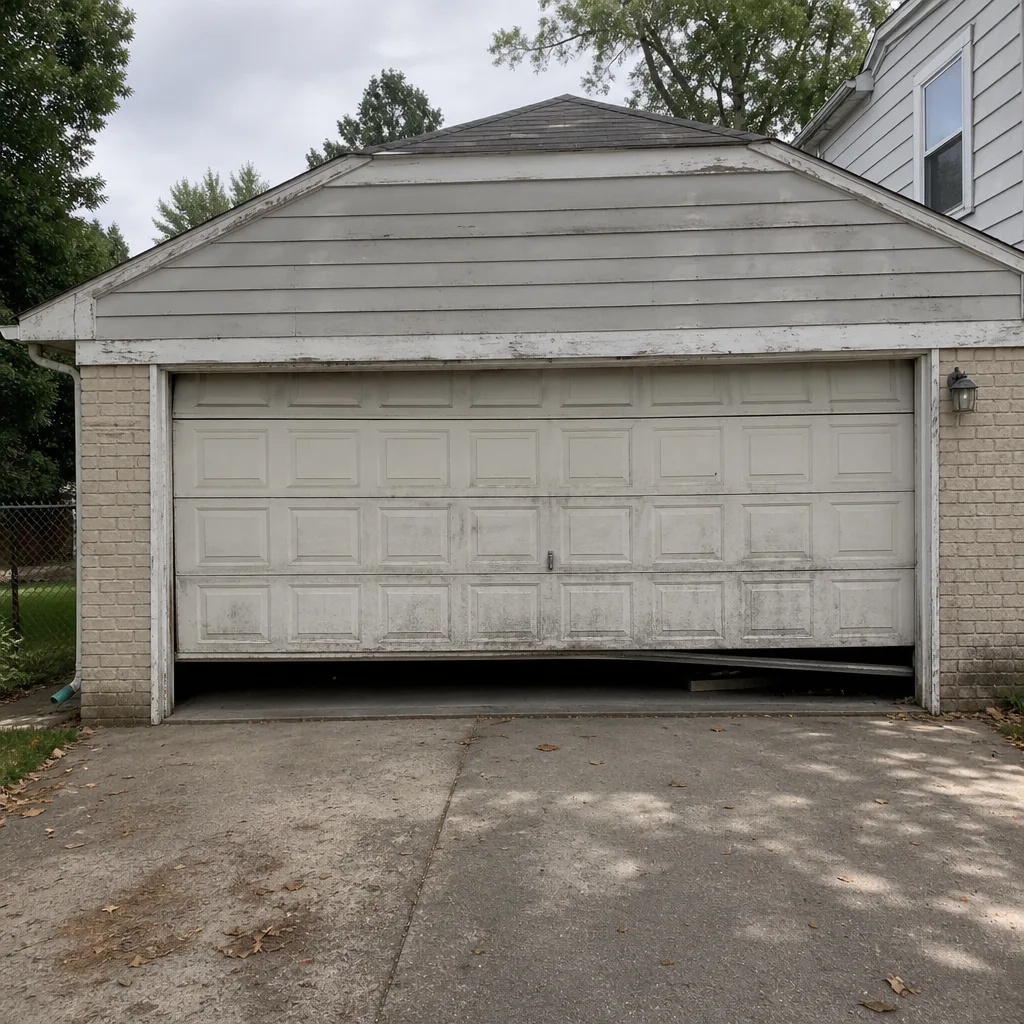 Before
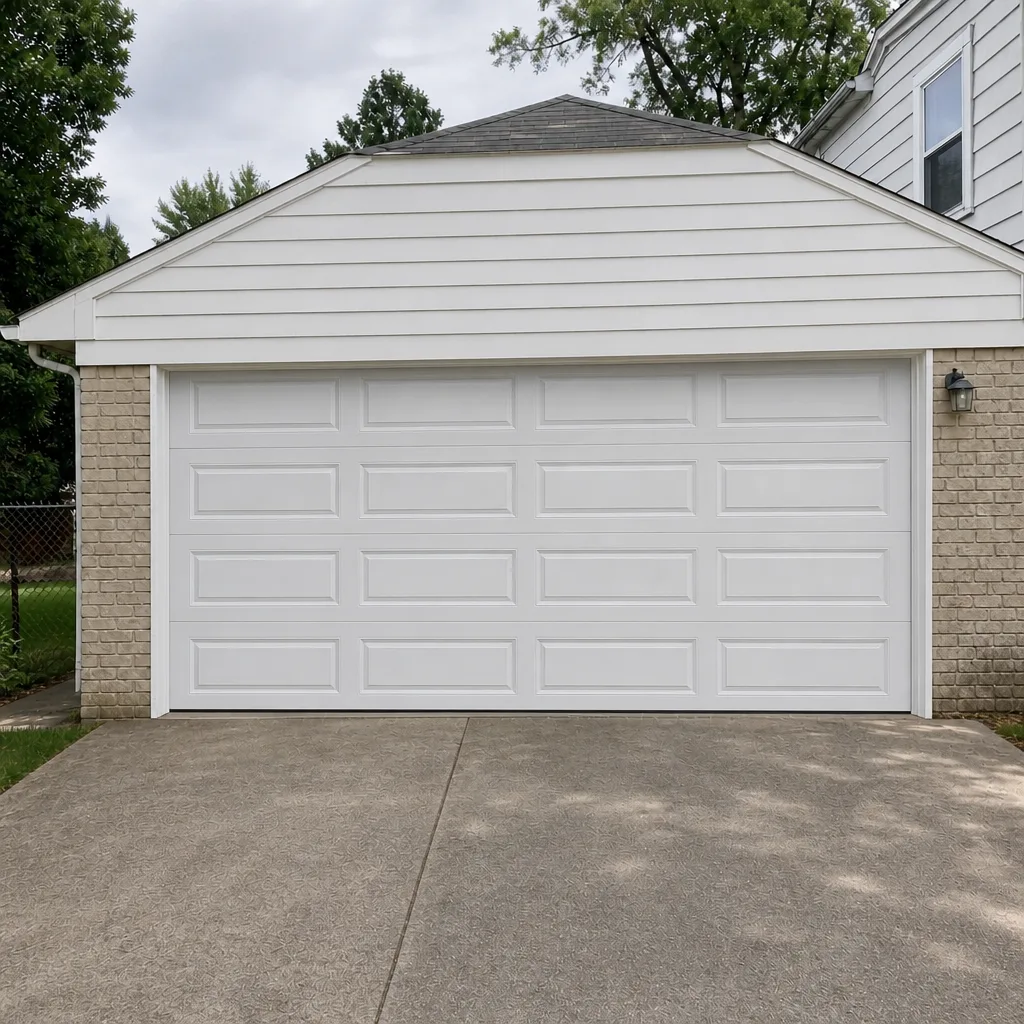 After
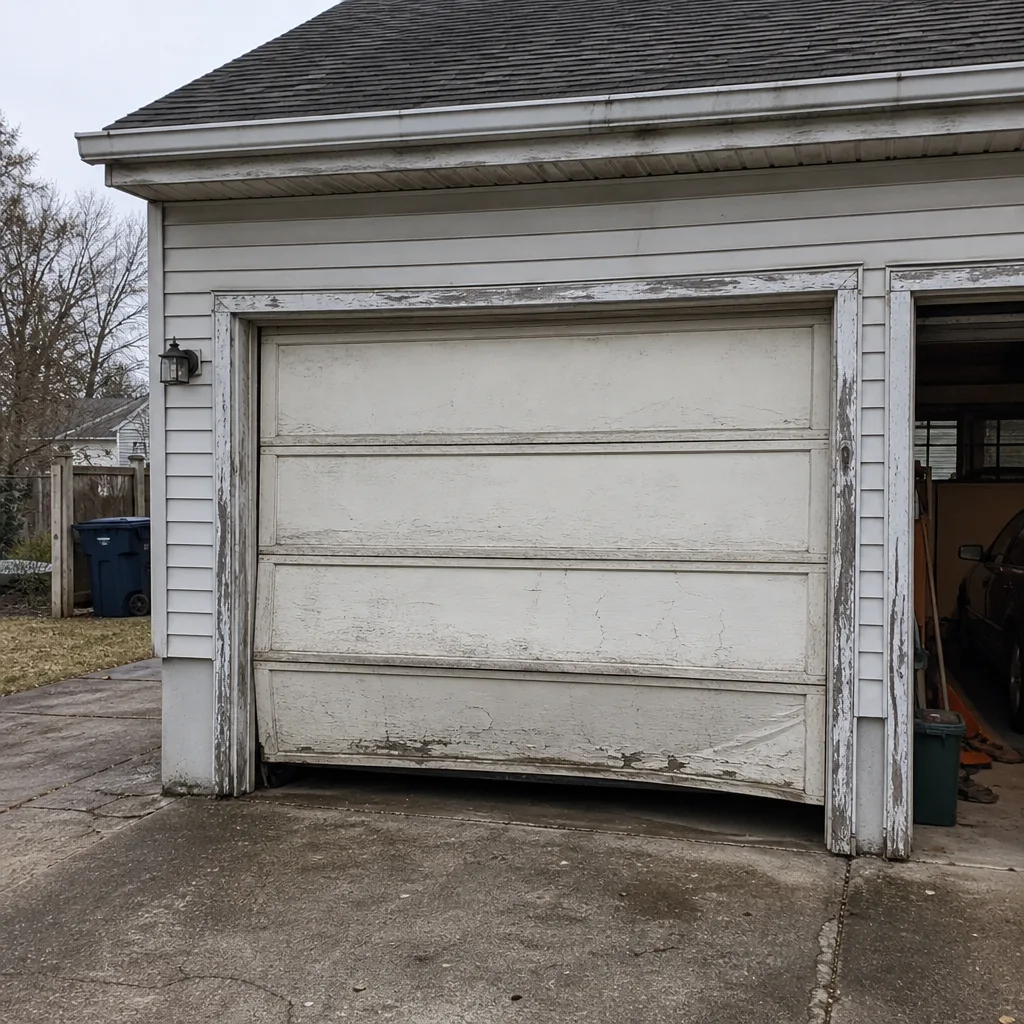 Before
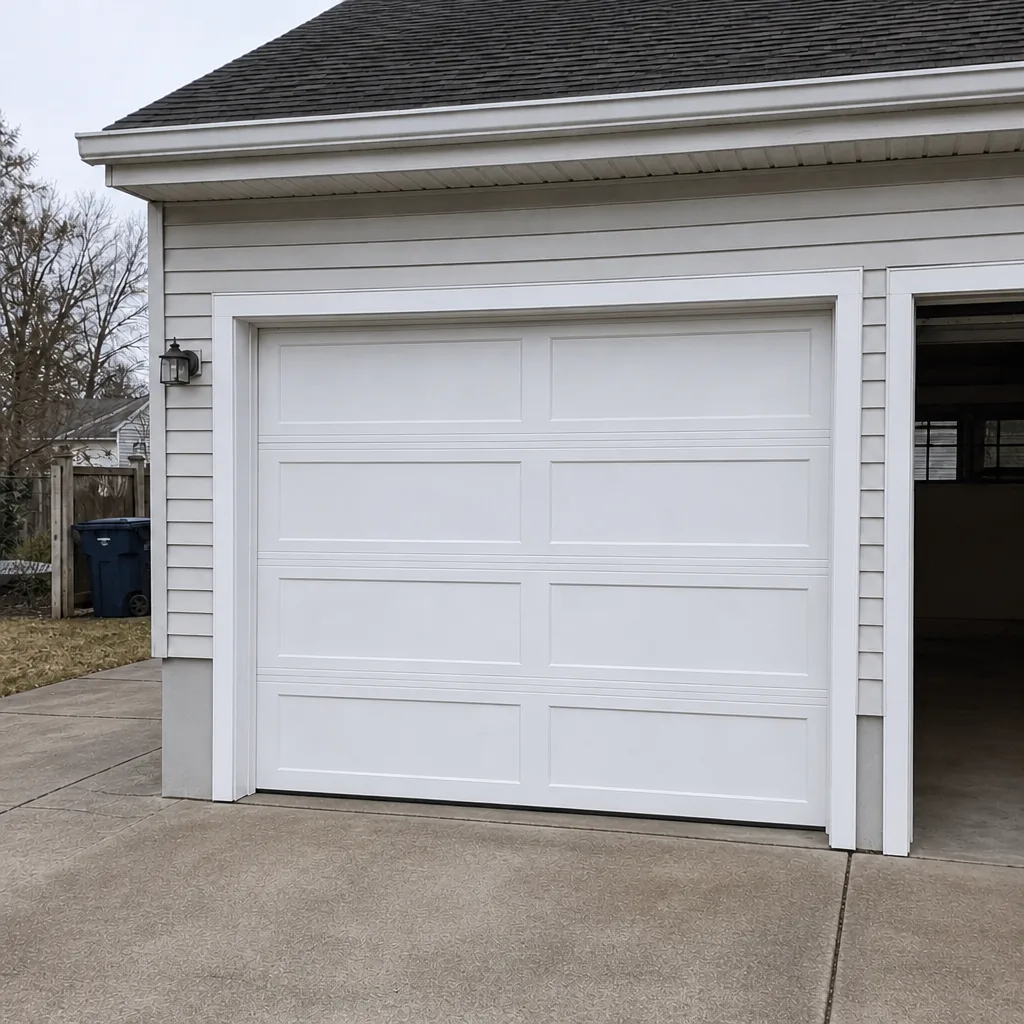 After
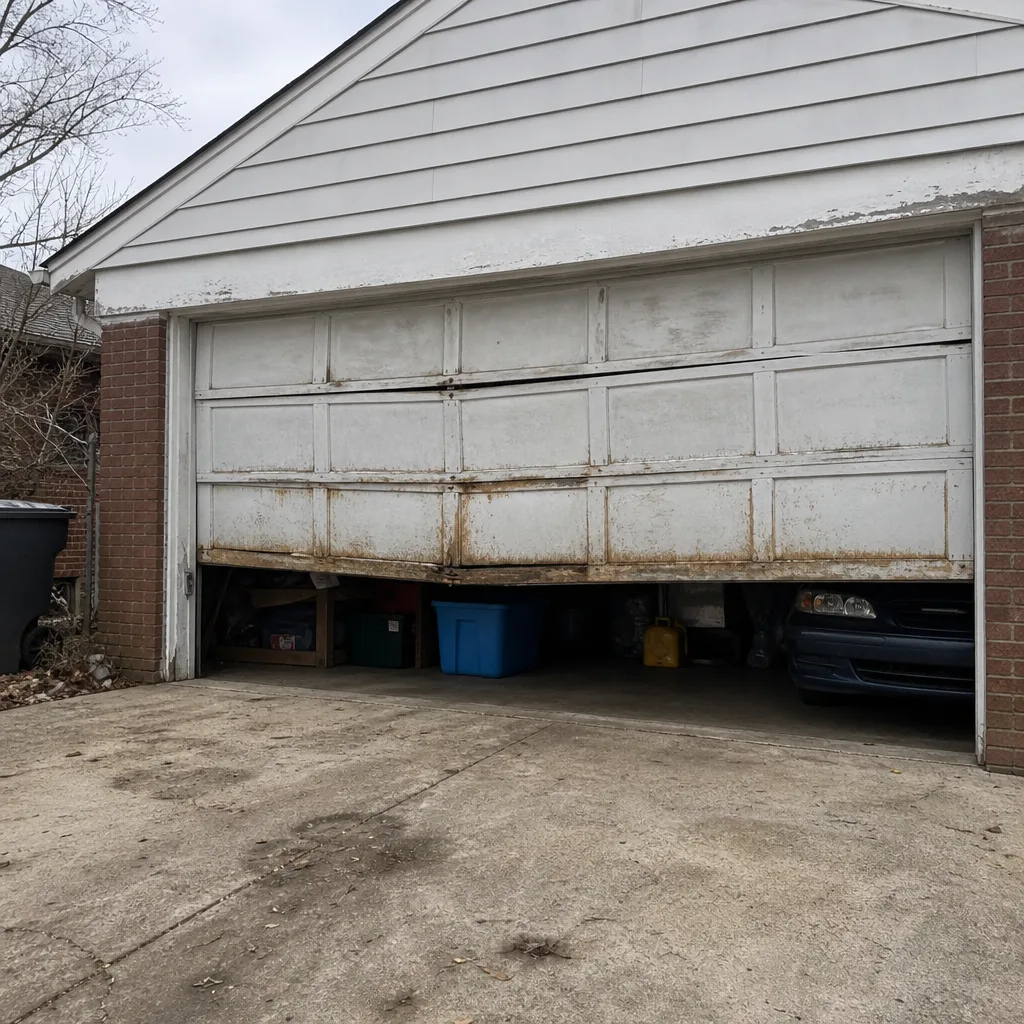 Before
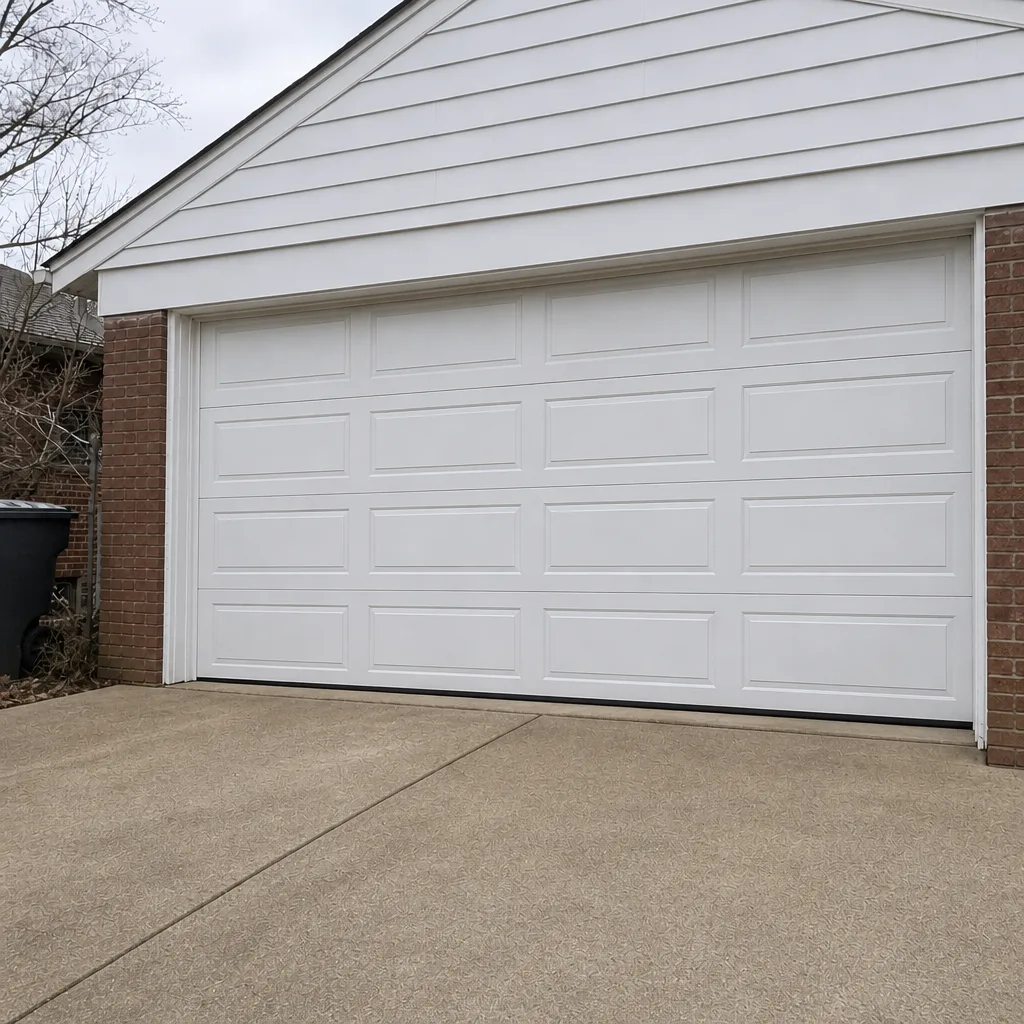 After
When to Call a Professional
Some problems give you time to plan. Others don’t. Call a professional right away if a spring has snapped, a cable has come loose, the door is stuck open or stuck closed, or the door has fallen off its track. Those are all situations where continuing to use the door is unsafe. Don’t force a stuck door up with a pry bar or a car – that’s how panels and tracks get damaged beyond repair.
Call for a scheduled visit if the door makes grinding or squealing noises, if it bounces when it reaches the floor, if the opener’s safety reverse fails, or if you’re planning a replacement and want an honest measurement and quote. Wilmington Garage Door Repair Pros connects you with local professionals and offers free estimates in Wilmington – call (877) 492-2046. We’ll take a look at the door and the opener together, so you’re not calling two contractors for one problem, and we’ll give you a written price before any work starts.
Frequently Asked Questions
Most garage door repairs in Wilmington are quoted per job, and the price depends on what’s broken and whether parts are in stock locally. A routine adjustment or a roller replacement costs far less than a spring or opener job. Call (877) 492-2046 for an exact quote – estimates are free.
We offer emergency garage door service and respond faster than a business-hours-only shop for a stuck or broken door. Spring failures, off-track doors, and openers that won’t respond are the cases that need a prompt visit. Call (877) 492-2046 and we’ll talk through what’s happening.
No. On every job the price is quoted and agreed before any work starts, so the written estimate is the number you’ll pay. If a repair reveals something additional that needs doing, we’ll stop and give you a new price to approve rather than adding charges after the fact.
Yes. The local professionals we connect you with are licensed and insured as required by their state, and they carry the tools and training needed for every brand on the door. If you want to verify credentials, ask before work begins and we will confirm them.
Replacement timing depends on the door and your opening. Standard-size doors from a locally stocked brand can often be measured and installed within a couple of weeks. Non-standard openings in older Wilmington homes may take longer because the door has to be ordered to size. The exact window is confirmed in your written quote.
Yes. We service the door and the drive system together, so an opener that’s failing gets diagnosed alongside the door. We work on LiftMaster, Chamberlain, Genie, and Craftsman units, plus most other major brands. Call (877) 492-2046 to talk through the symptoms.
The Bottom Line
Three things drive most garage door decisions in Wilmington. First, measure the rough opening before you order anything, especially on pre-1970 homes. Second, match the door to the climate zone 5A freeze-thaw pattern with an insulated steel door and tight seals, not just a high R-value number. Third, plan for your alley access and headroom, since those change the springs and opener you need. Repair versus replace comes down to whether the door’s structure is sound and whether parts are available locally. When you’re ready to sort it out, Wilmington Garage Door Repair Pros is one call for the door, the springs, and the opener.
Written by the team at Wilmington Garage Door Repair Pros.