Last updated November 21, 2026
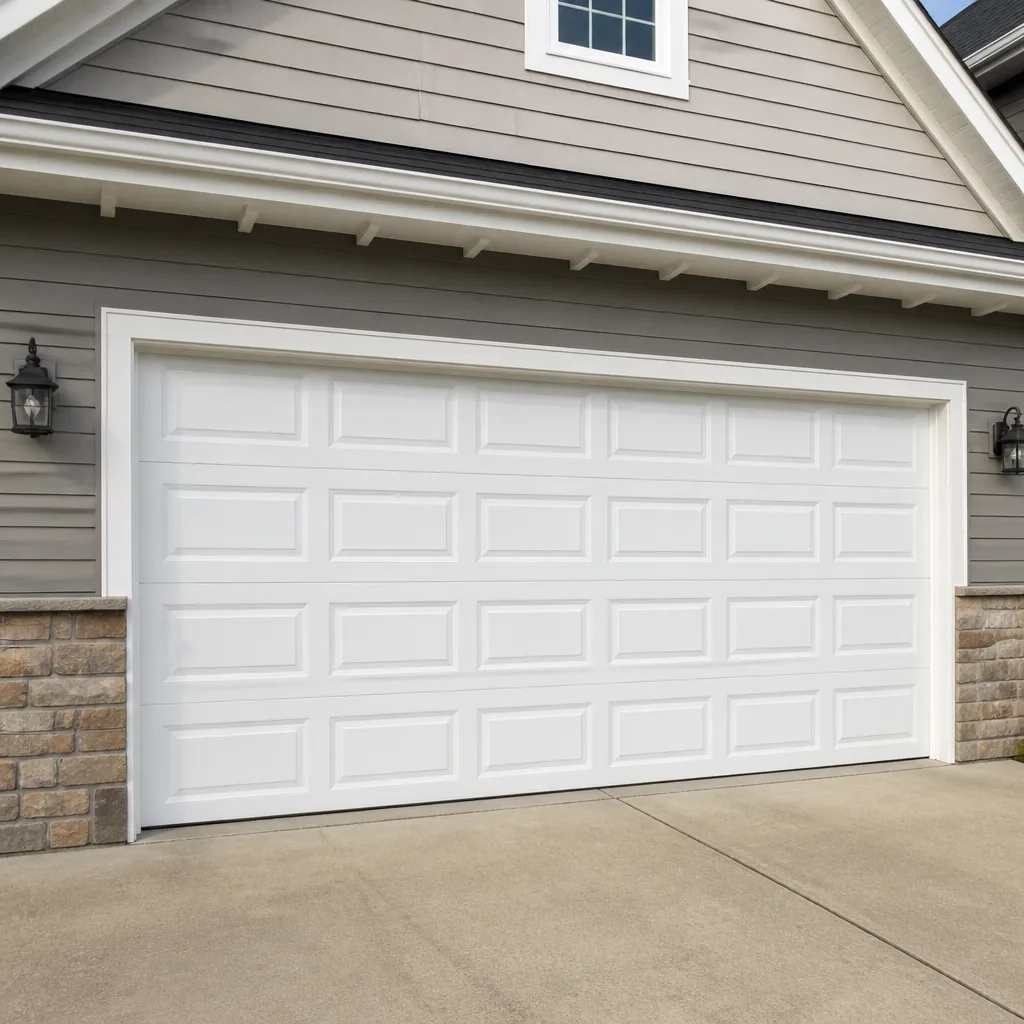 Raised-panel steel
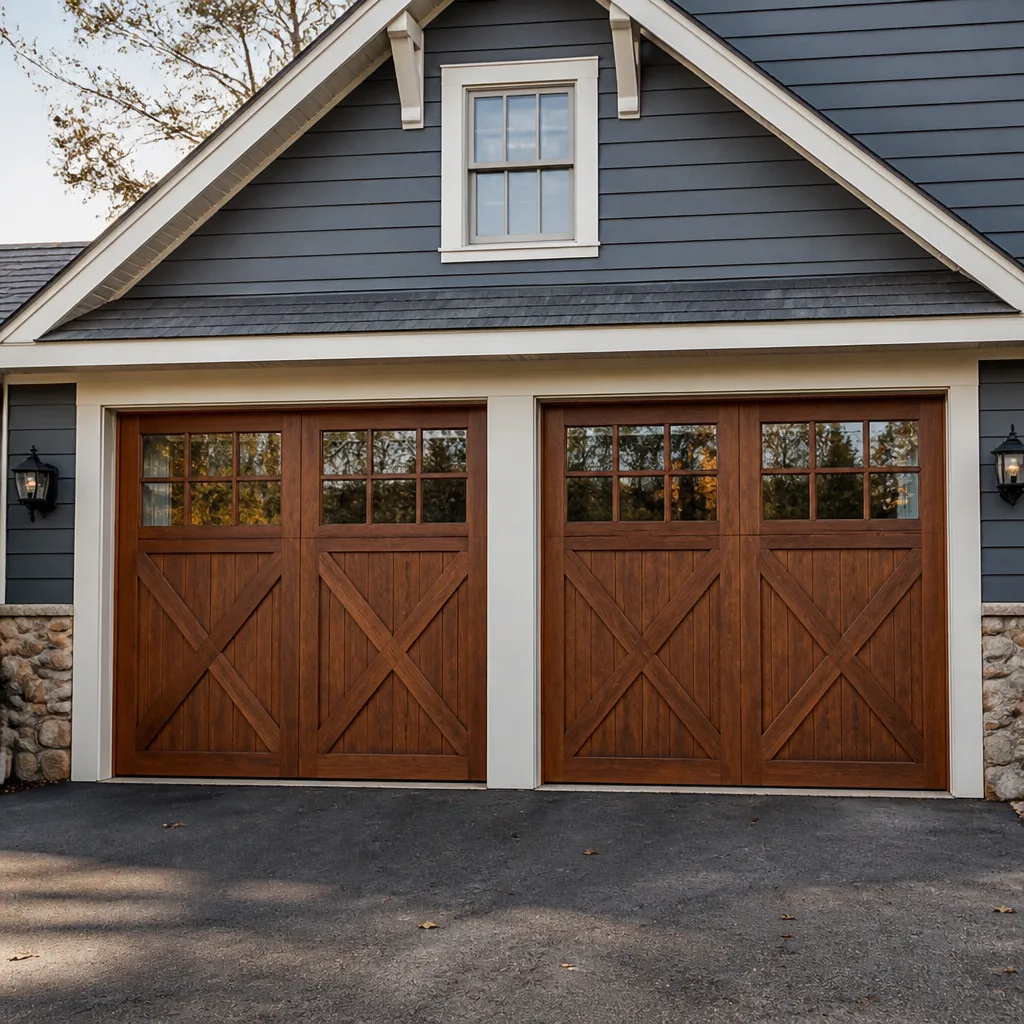 Carriage house
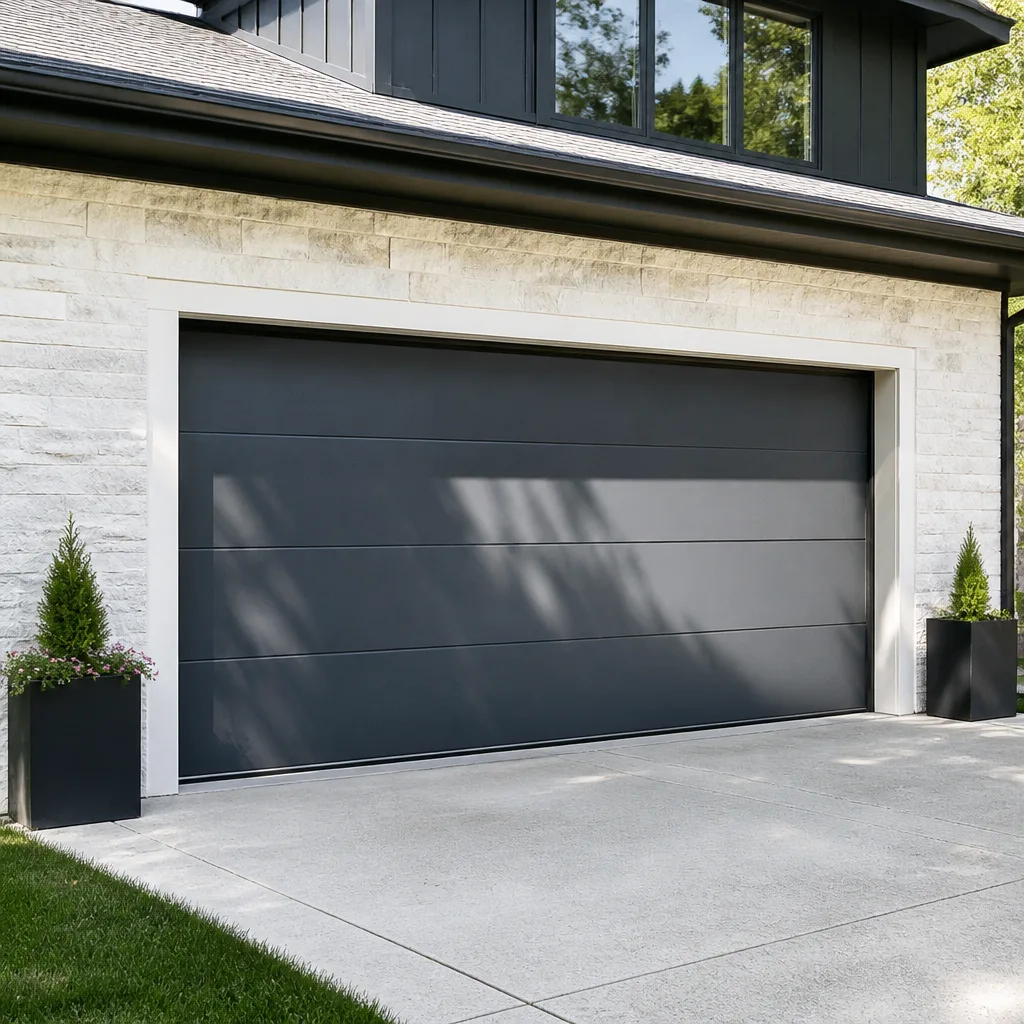 Modern flush
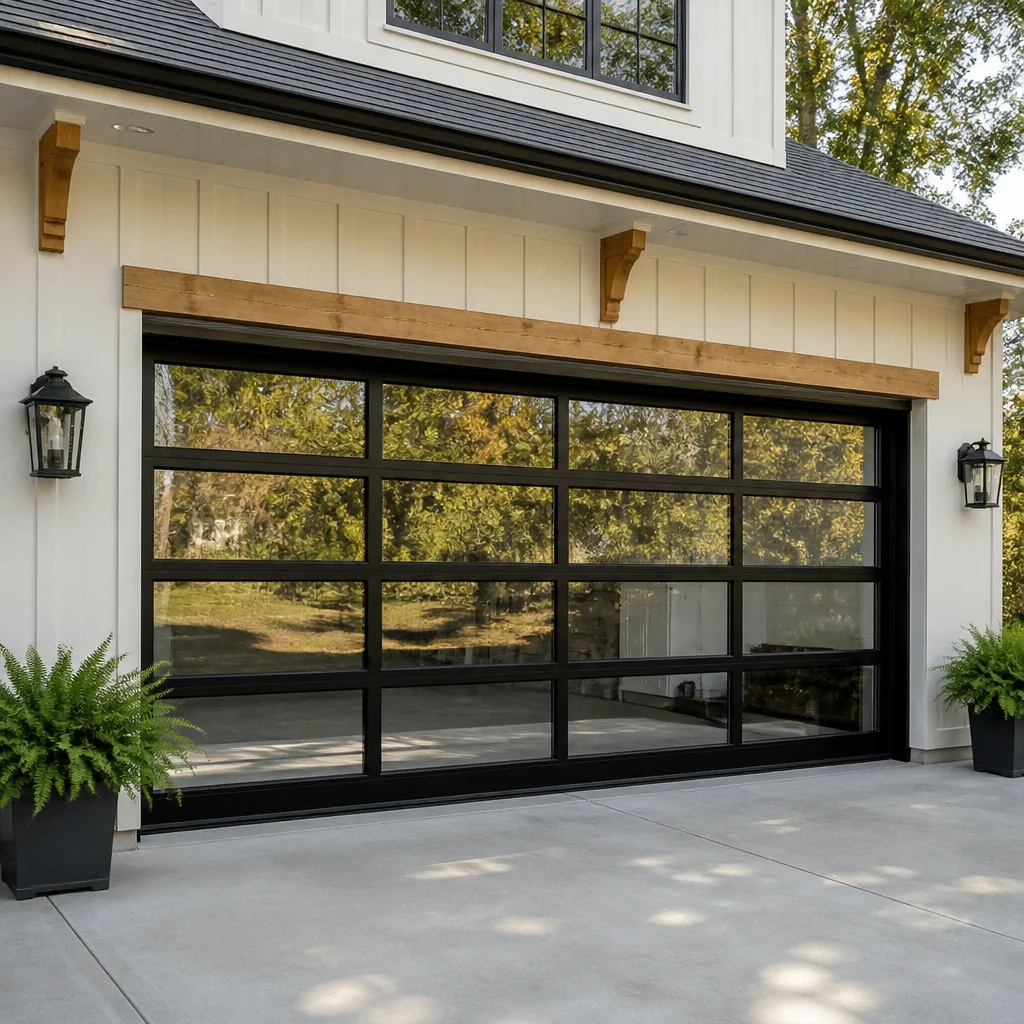 Full-view glass
 LiftMaster openers
 Chamberlain openers
Full 25-point door and opener safety check with every visit - springs, cables, rollers, tracks, and your LiftMaster or Chamberlain opener included
You get a price before we start. It does not change when the pro arrives.
Get your free estimateDIY vs Professional Garage Door: The Wilmington Homeowner’s Decision Guide
Most advice on garage doors splits the world in two: fix it yourself or call someone. That framing misses the real answer. A garage door is a system of parts with wildly different risk levels, and the smart move for a Wilmington homeowner is to sort the job task by task. Lubricating rollers is not the same undertaking as winding a torsion spring, and treating them as one decision either wastes your money or puts your hands somewhere they shouldn’t be. In this guide we’ll draw a hard line between what’s genuinely safe to handle yourself, what’s a judgment call, and what should never be a DIY project in Wilmington. You’ll also see the honest math on what DIY actually saves once you count tools, time, and the chance you’ll end up paying a professional anyway.
Quick Answer
For a Wilmington homeowner, the decision isn’t DIY versus professional. It’s which tasks are safe to do yourself and which aren’t. Weatherstripping, remote programming, and lubrication are reasonable DIY work. Torsion springs, cable drums, and structural header repairs are never-DIY jobs because the stored energy and tension in those parts can injure you in under a second, no matter how careful you are or how many videos you’ve watched. Everything else is a judgment call based on your tools and comfort level.
Styles & brands we work with
- Raised-panel steel
- Carriage house
- Modern flush
- Full-view glass
- LiftMaster openers
- Chamberlain openers
Table of Contents
- The Three Task Categories: DIY-Safe, Caution, and Never-DIY
- What DIY Actually Saves in Wilmington
- Delaware Liability and Your Homeowner’s Insurance
- Where a Confident DIYer Legitimately Saves $200-$400
- How to Work Alongside a Professional
- Reading the Symptoms: What Your Door Is Telling You
- Opener and Drive System Repairs: A Different Risk Profile
- The Tool Reality Check
The Three Task Categories: DIY-Safe, Caution, and Never-DIY
The single most useful thing we can tell a Wilmington homeowner is this: sort the job into one of three buckets before you touch anything. The bucket determines whether you should pick up a wrench or pick up the phone.
DIY-Safe Tasks
These are low-energy, low-tension jobs. Nothing is under stored force, and a mistake won’t bring a door down on you.
- Weatherstripping and bottom seals. Replacing the rubber strip along the bottom of the door is a straightforward job with a few hand tools. A fresh seal keeps out drafts, water, and pests, and it’s one of the highest-value small tasks on any door.
- Opener remote programming. Pairing a new remote to a Genie or Chamberlain unit follows the manual step by step. Every major brand has a clear pairing sequence.
- Lubrication. A garage door has hinges, rollers, and a track that benefit from periodic lubrication with a garage-door-specific lubricant. A few minutes twice a year keeps things quiet and smooth.
- Visual inspections. Looking for frayed cables, worn rollers, loose bolts, or a sagging panel costs nothing and catches problems early.
- Cleaning the photo-eye sensors. If the door won’t close, a dirty or misaligned safety sensor is often the culprit. A soft cloth and a straightening pass solves most of these.
Proceed-with-Caution Tasks
These aren’t immediately dangerous, but a mistake can cost you more than it saves or leave you calling a professional after all.
- Panel dent repair. Small cosmetic dents can sometimes be worked out, but panels on a Clopay or Amarr door are matched systems. A botched repair can look worse than the dent and may affect the panel’s structural integrity.
- Track adjustment. Straightening a slightly bent track with the door fully closed and the opener disconnected is a judgment call. If the track is badly bent or the door is binding, stop.
- Replacing rollers. Half the rollers are simple to swap. The ones under a loaded cable or spring are not, and that’s where homeowners get in trouble.
Never-DIY Tasks
Some tasks carry injury or code risk that makes professional work the only rational choice, regardless of your skill. We’re specific about this because the consequences are serious.
- Torsion springs. A torsion spring stores enough energy to break a wrist or take out an eye in under a second. A winding bar slipping loose is the kind of accident that sends a person to the emergency room. This is why garage door spring repair is one of the jobs we treat with the most respect.
- Extension springs. Similar stored energy, similar danger. These are the springs over your head that snap violently when a cable fails.
- Cable drums and cables. The cables are under high tension from the springs. Touching them with the door up, without proper winding-bar discipline, is the second big injury category we see.
- Structural header work. If the door’s header or jamb is failing, that’s a structural repair. It affects how the door hangs and how the tracks stay aligned. This needs a pro.
If you take nothing else from this guide, take this: springs and cables are never a YouTube-and-a-winding-bar job. If the spring is the problem, that call goes to a trained professional. Our technicians have up to 10 years of experience and know exactly how much energy sits in a loaded spring. The job looks simple on video. It isn’t.
What DIY Actually Saves in Wilmington
The cost-benefit math sounds simple, and it never is. DIY savings come from skipping labor, but that labor cost doesn’t stand alone. To do the job yourself, you need the tools, the time, and the confidence to do it right the first time. Miss any of those and DIY costs more than the repair would have.
What the equation really includes
- Tool cost. A torsion job needs winding bars, which you’ll buy and rarely use again. A track adjustment needs clamps and levels. If you don’t already own the tools, the equipment often eats the labor savings on the first job.
- Time cost. A weekend afternoon is not free if it’s your one day off. Multiply the hours by what that time is worth to you.
- Callback probability. This is the number people forget. If your first attempt doesn’t take, you’re paying a professional to fix your work plus the original problem. The garage door repair you need after a failed DIY is usually more involved than the one you started with.
- Parts risk. Buying the wrong seal, spring, or roller for your door’s make and model is common. Genie and Wayne Dalton components aren’t always interchangeable, and ordering a swap-in part that doesn’t fit costs you a return and a week of waiting.
The honest cost ranges
Every job is quoted individually, so treat these as typical ranges for what’s involved. Your written estimate is the price you pay. Here’s how it tends to break down:
- Weatherstripping replacement: small hand-tool job, DIY-saveable. If you call a pro, expect a modest service-call price.
- Lubrication or tune-up: largely time, not parts. Reasonable either way.
- Bottom seal replacement: low-cost part and labor. DIY-saveable with the right seal.
- Single torsion spring replacement: moderate ticket. A matched pair (which is often replaced together) costs about twice the single-spring figure.
- Cable replacement and drum service: specialized work with meaningful risk. Not a cost-savings opportunity.
- Panel replacement: you’re paying for a matched panel that has to look right. Depends on the brand.
- Opener repair or replacement: varies by brand and model. Opener diagnostics are worth paying for.
The pattern: the cheap, low-energy tasks are the ones worth DIYing. The expensive jobs, which is where the real savings seem to be, are also the ones carrying the injury risk. The cost-benefit math you actually want is “save a little where it’s safe, pay for the dangerous parts.”
Delaware Liability and Your Homeowner’s Insurance
Here’s the part of the DIY decision almost no one talks about. If a garage door you maintained yourself injures someone, and the injury traces back to a repair or adjustment you made, your homeowner’s insurance company may investigate the maintenance history. A garage door is part of the home’s structure, and structural systems require proper upkeep. Improperly maintained equipment can complicate a claim.
What that means in practice
- Maintenance records matter. If you can show a spring, opener, or cable was serviced by a trained technician, that’s a clean paper trail. If the door was adjusted by hand and something failed later, the insurer’s questions get harder.
- DIY is not prohibited. You’re allowed to work on your own home in Delaware. The issue arises after an accident, when the maintenance of the door is examined.
- The danger cases are the claim cases. A properly installed and serviced torsion spring failing on its own is one thing. A spring that was rewound by someone without training and then let go is a different conversation with any insurance investigator.
- Openers are electrical. An opener wired incorrectly, or a safety reverse feature bypassed, is the kind of thing that gets inspected closely after an injury.
- Renters and property managers. If you rent a property or manage one, DIY repairs on structural components can put you out of compliance with your own lease or management agreement. It isn’t worth it.
We handle the work so the maintenance history is documented. If you’re not sure whether a job is safe to do yourself, ask your city’s building department or a licensed professional. That’s a five-minute conversation worth having.
Where a Confident DIYer Legitimately Saves $200-$400
There are real savings available to the careful homeowner, and they come from the low-energy jobs where professionals charge for time and the tools are basic. Here’s where a confident Wilmington DIYer can save meaningfully without taking on real risk.
- Weatherstripping and bottom seal. The material is inexpensive and the tools are a screwdriver and a utility knife. Replacing the seal around the door and the bottom strip is a genuine savings and worth doing yourself if the door is otherwise in good shape.
- Lubrication and tune-up. Keeping rollers, hinges, and the track lubricated isn’t hard. It’s a small job that pays for itself in smoother, quieter operation.
- Opener remote pairing and battery replacement. Every major brand has a clear pairing step. If you bought a new remote from Genie, Chamberlain, or LiftMaster, pairing it takes minutes.
- Cleaning the photo eyes and clearing small obstructions. A door that won’t close because a leaf is in the sensor’s path is a two-minute fix. No professional needed.
- Handling prep and cleanup on a bigger job. Clear out the garage, move the car, remove fragile items near the door, and clean up afterward. This is labor you can do for free and it lets the technician focus on the skilled work.
That totals a real, meaningful saving for a homeowner with a few basic tools. The key is that all of these are low-energy jobs. The moment the savings require opening up the spring or adjusting a loaded cable, the math flips.
How to Work Alongside a Professional
You don’t have to choose between doing everything yourself and handing the whole door over. The middle path is often the best one: hire a professional for the skilled, dangerous part and handle everything around it yourself. Here’s how that works in practice.
What you can own
- Prep. Clear the space in front of and around the door. Move cars, storage, and anything fragile. A cleared workspace saves time and makes the actual repair faster.
- Diagnosis on the easy stuff. Test the door’s balance by disconnecting the opener and lifting it halfway. Test the safety reverse feature with a small object on the floor. These tests tell you something useful before anyone arrives.
- Part selection on cosmetic items. If the job is a panel replacement, you can pick the style and finish with the technician. Clopay and Amarr both offer matching options.
- Cleanup. Sweeping up after the work, disposing of packaging, wiping down the tracks. Routine, safe, and genuinely helpful.
What you should pay for
- Torsion and extension spring work.
- Cable and drum service.
- Track straightening or replacement if the door is binding.
- Structural header or jamb work.
- Opener diagnostics if the door itself is fine but the opener is acting up.
That split means you’re only paying for the skilled labor that actually needs paying for. One call covers both the door and the opener, so you’re not sourcing two separate contractors. Our technicians have up to 10 years of experience and know every major brand on the market, from LiftMaster to Raynor, so diagnosis goes quickly.
Reading the Symptoms: What Your Door Is Telling You
Before you decide DIY or professional, find out what’s actually wrong. A garage door gives you clear signals. Here’s how to translate them and match each one to the right level of response.
Door won’t move at all
Check the opener first. Listen for the motor running. If the motor runs but the door doesn’t move, the issue is often the opener or a snapped spring. If the motor is silent, check the power and the safety sensor. If the door is stuck and you can’t determine why, that’s the point to call for service. Emergency availability matters here because a stuck door leaves a car trapped or a house open.
Loud bang, then the door won’t lift
That’s almost certainly a spring. A snapped spring on a torsion or extension system means the door is now dead weight. Don’t try to lift it by hand. This is the classic spring emergency, and it’s a professional job.
Grinding, squeaking, or squealing
Usually lubrication or worn rollers. This is a tune-up-level job, and the DIY half of this guide applies.
Door lifts crooked or goes crooked as it closes
This can be a cable, track, or spring issue. If it’s a visual track bend you can address, try it with the door closed. If it keeps going crooked after a simple adjustment, stop and call. It’s a sign of a deeper cable or spring problem.
The opener runs but reverses immediately
This is usually a safety sensor or a travel-limit setting. Cleaning the sensors and checking for obstruction solves most cases. If it persists, the opener likely needs a professional look.
Door is aging and one part after another is failing
Repair or replace? This is where a straight answer matters. We’ll tell you honestly whether repair or replacement is the better call on your specific door, whether it’s a Wayne Dalton or a Genie-driven system. Sometimes a repair prolongs the life of a solid door. Sometimes the honest answer is a new one, and one call covers both.
Opener and Drive System Repairs: A Different Risk Profile
Openers deserve their own section because they’re a different kind of job. A garage door opener is electrical, not mechanical in the spring-and-cable sense, and it involves wiring, circuit boards, and sensors. Genie and Chamberlain units have their own quirks. The risk profile is lower for injury but the failure modes are more subtle.
When you can go DIY
- Pairing a new remote. Manuals spell out the pairing sequence clearly. A quick job.
- Replacing batteries in the remote or keypad. Simple.
- Adjusting travel limits and force settings. A basic adjustment found in the manual. This controls how far the door opens and how hard it pushes. If you’re careful, you can adjust from the manual controls.
- Cleaning the photo eyes. Routine.
When to bring in a pro
- Replacing a motor or circuit board. Electrical work with possible shock risk. Not a DIY job.
- Rewiring or installing a new opener. Electrical installation is licensed work in most contexts. If you’re not licensed, don’t do it.
- Diagnosing a unit that’s behaving erratically. The garage door opener repair that takes a trained look is the one that actually gets fixed.
- Safety reverse not working. This is a safety feature. If it fails, don’t ignore it. It protects people and pets. A professional should inspect it.
The general principle: mechanical check-list items and settings changes are DIY territory. Anything involving electrical wiring or a board-level repair is a professional job. Our technicians handle both the mechanical and electrical sides of the opener and door, so you don’t need two contractors.
The Tool Reality Check
The tools you’d need for a serious garage door DIY are a bigger barrier than most homeowners expect. Before you commit to a task, check whether you actually own what the job requires.
- Torsion winding bars: specialized, and you need two. Never substitute with screwdrivers. A winding bar slipping out of a spring under load is exactly how people get hurt.
- Spring winding tension gauges: not something most homeowners have on hand.
- Clamps and levels for track adjustment: a decent set costs more than some tune-up services.
- A socket set and a proper torque range: hinges and brackets need to be snug, not overtightened.
- A ladder you feel comfortable on: the spring is overhead. Working above your reach on a shaky ladder adds a separate fall risk to an already dangerous job.
The takeaway: the tool list for a spring job alone is enough to make a professional cheaper than the DIY attempt once you count the equipment. The DIY tasks worth doing are the ones that use the tools you already own. If a task requires a tool you’d have to buy for this job alone, that’s a sign it belongs with a professional.
Common Mistakes to Avoid
- Trying a spring job after watching one video. A winding bar, a spring, and high stored energy is not a two-hour project. The most common mistake is underestimating the stored energy in a loaded spring. The video makes it look easy. The torque in that spring won’t care how careful you think you’re being.
- Disconnecting the opener but leaving the door up. With the opener disconnected, the door can drop. Handle the door carefully and keep it fully closed when you’re working around the tracks.
- Substituting screwdrivers for winding bars. This is the single most common cause of spring injuries. Screwdrivers slip.
- Replacing a spring without matching the pair. If one spring fails, the matched pair is usually replaced together. Replacing only one can unbalance the door and stress the other. A single spring price covers one spring, not the pair.
- Buying the wrong part for your door. Clopay, Amarr, Wayne Dalton, and Genie parts don’t always interchange. Measure before you order, and check the model number on the door or opener.
- Ignoring the maintenance history when the door is failing. A door that’s been lubricated, adjusted, and serviced is easier to diagnose and safer to operate. A door that’s been ridden hard without upkeep is the one that fails at the worst time.
- Over-tightening hinges and bolts. Snug is not the same as tight. Overtightening can strip the metal and deform the panel. It’s a small error that turns into a bigger repair.
- Closing the door on an obstruction without checking sensors. If the door reverses, check for obstructions and sensor alignment before adjusting the force settings. Increasing force to push through an obstruction can hide a real problem.
See the difference
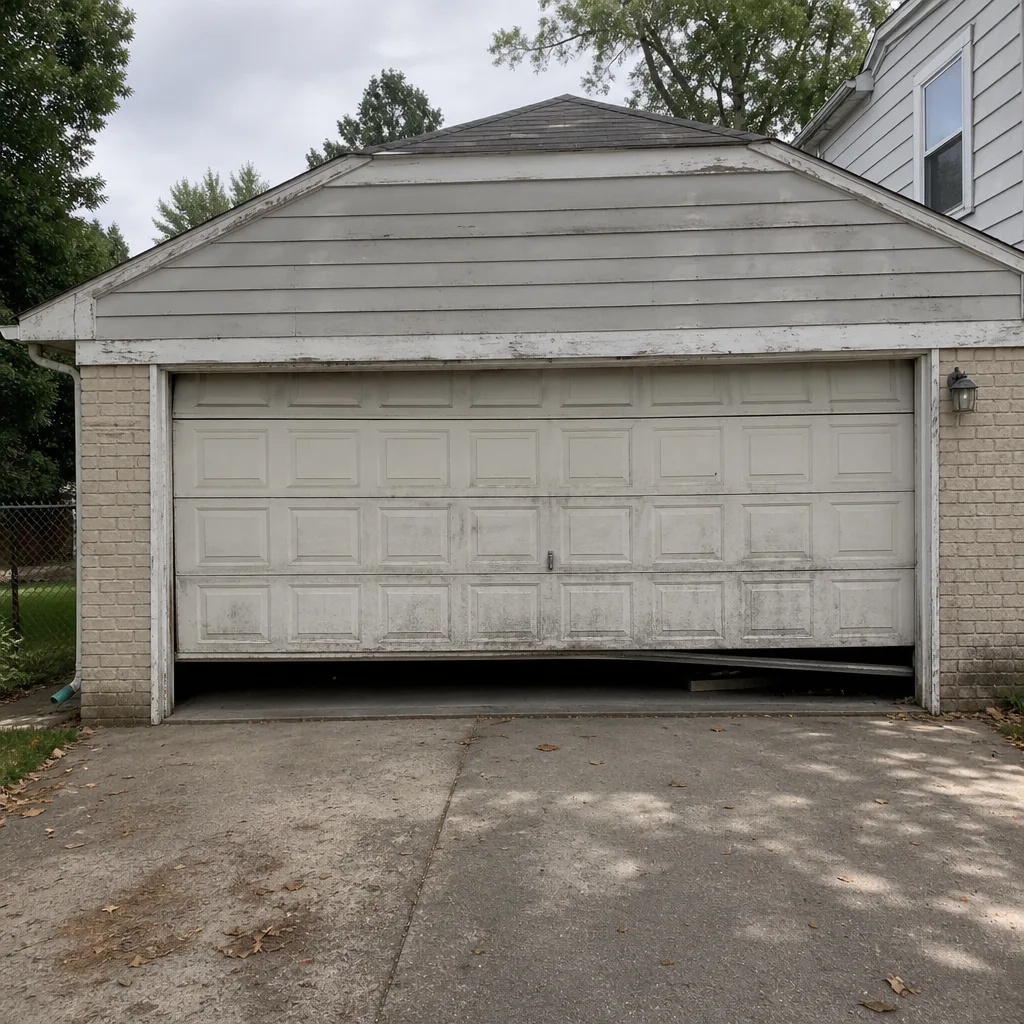 Before
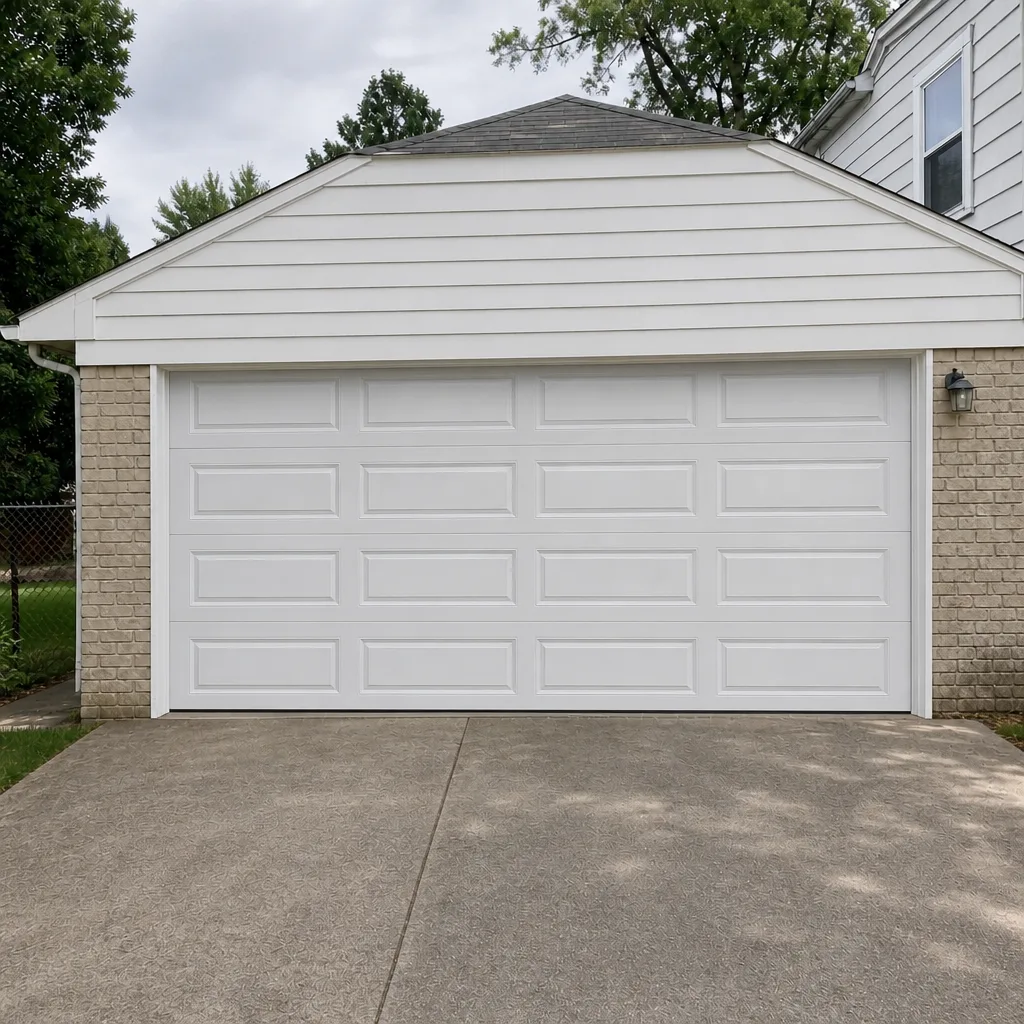 After
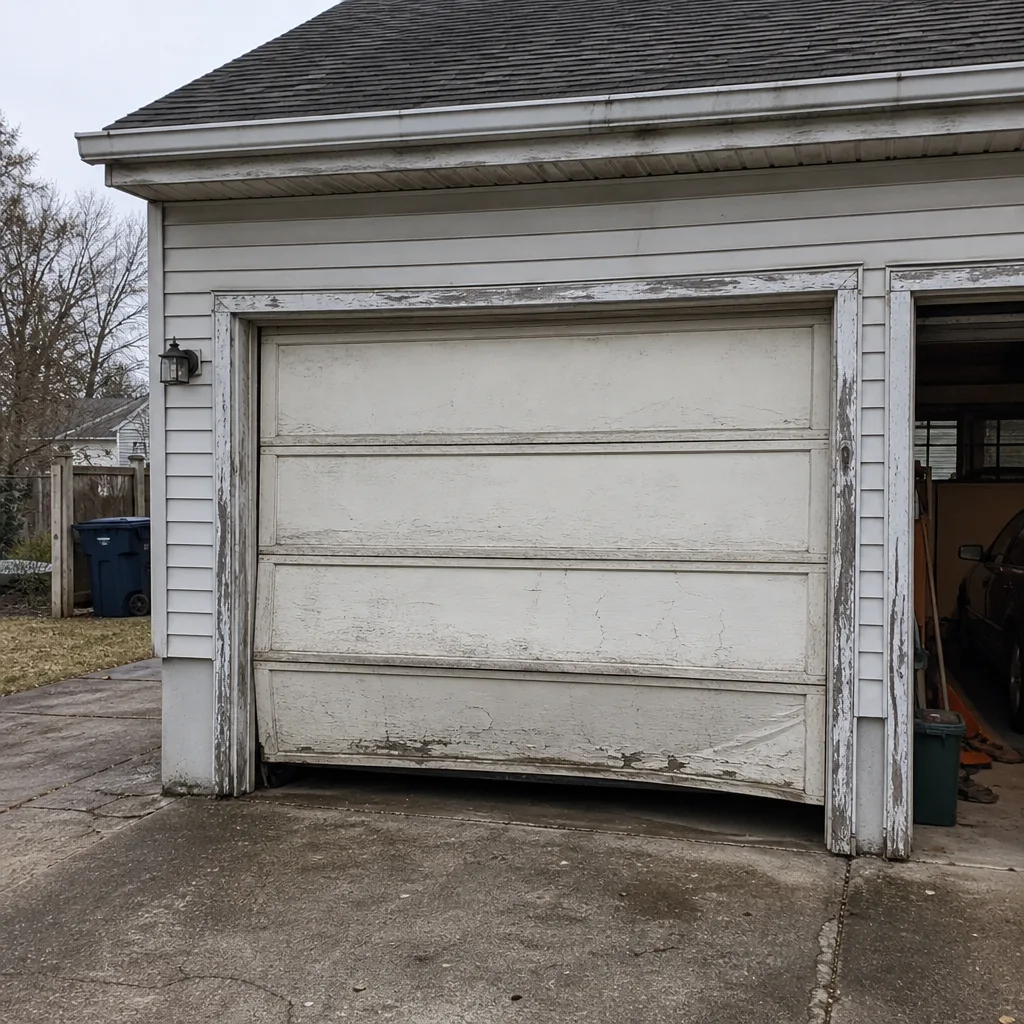 Before
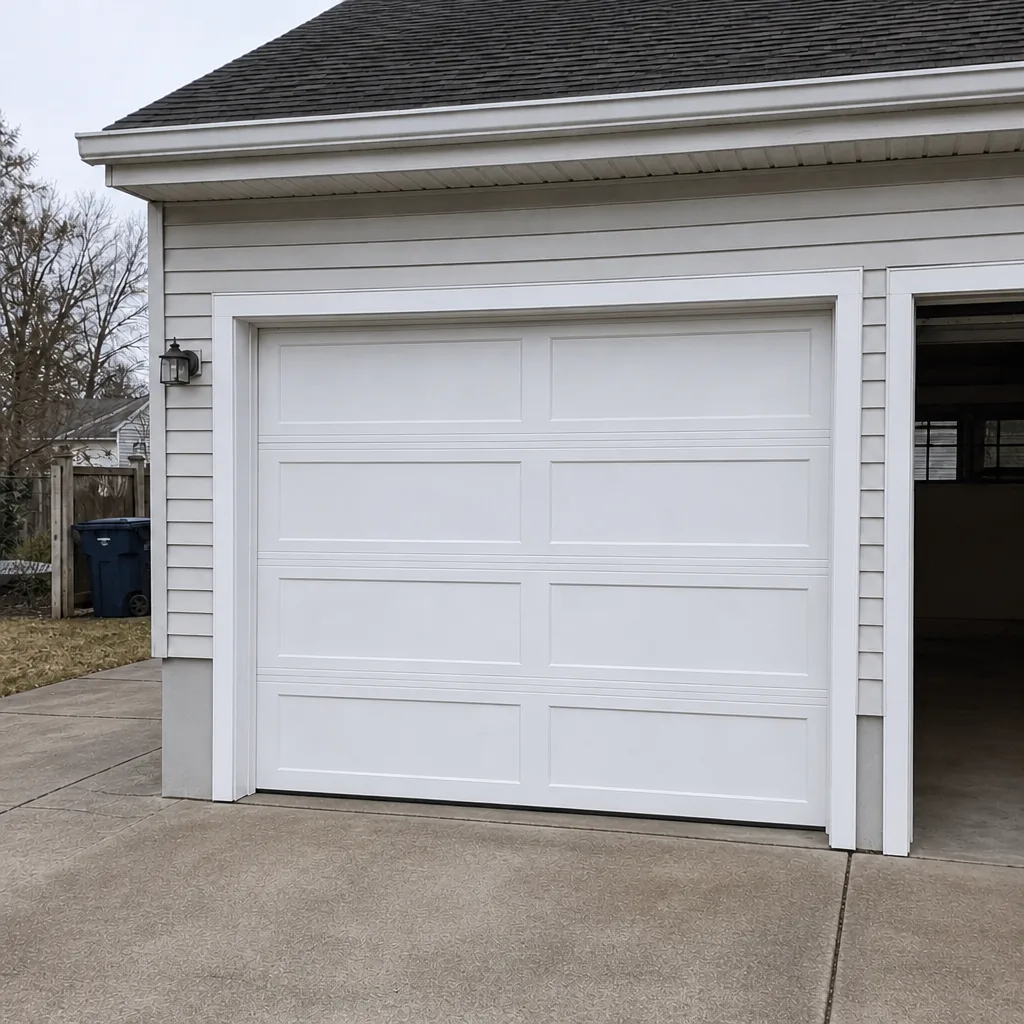 After
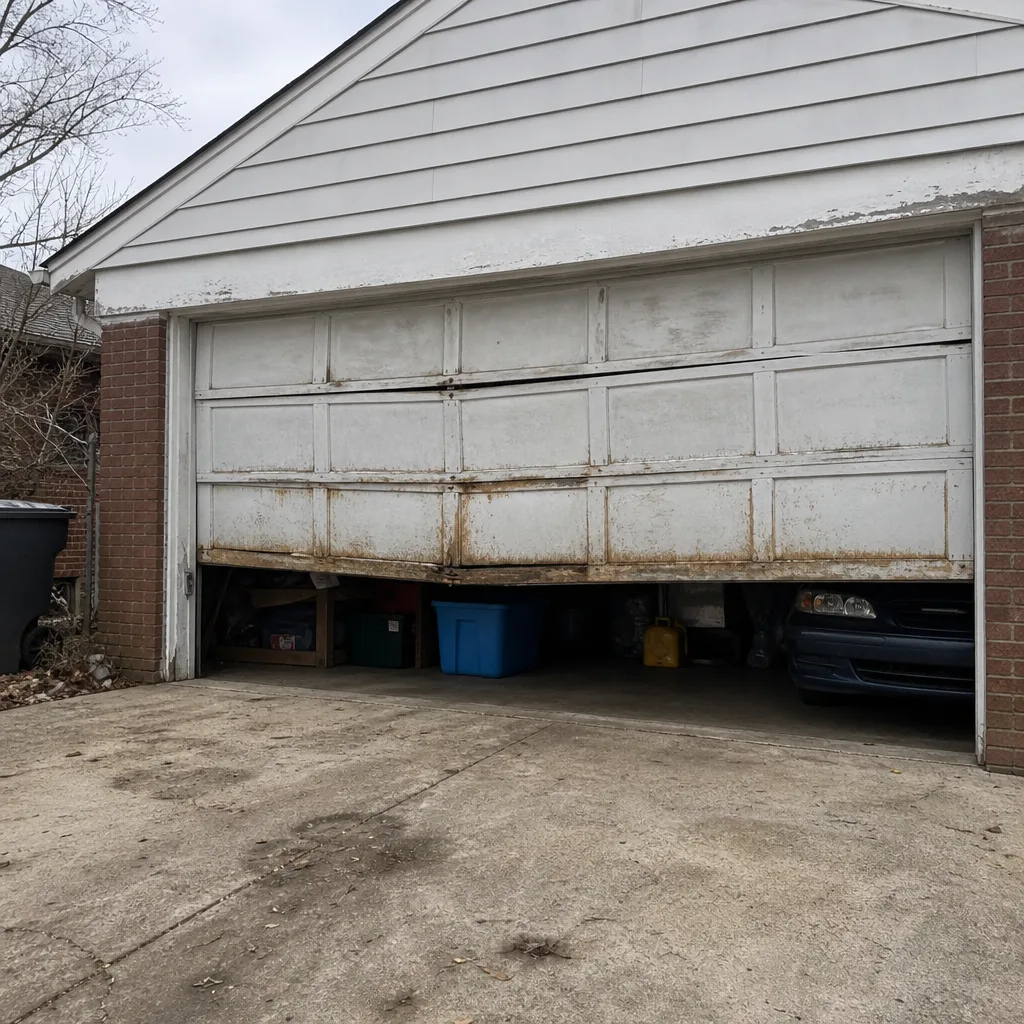 Before
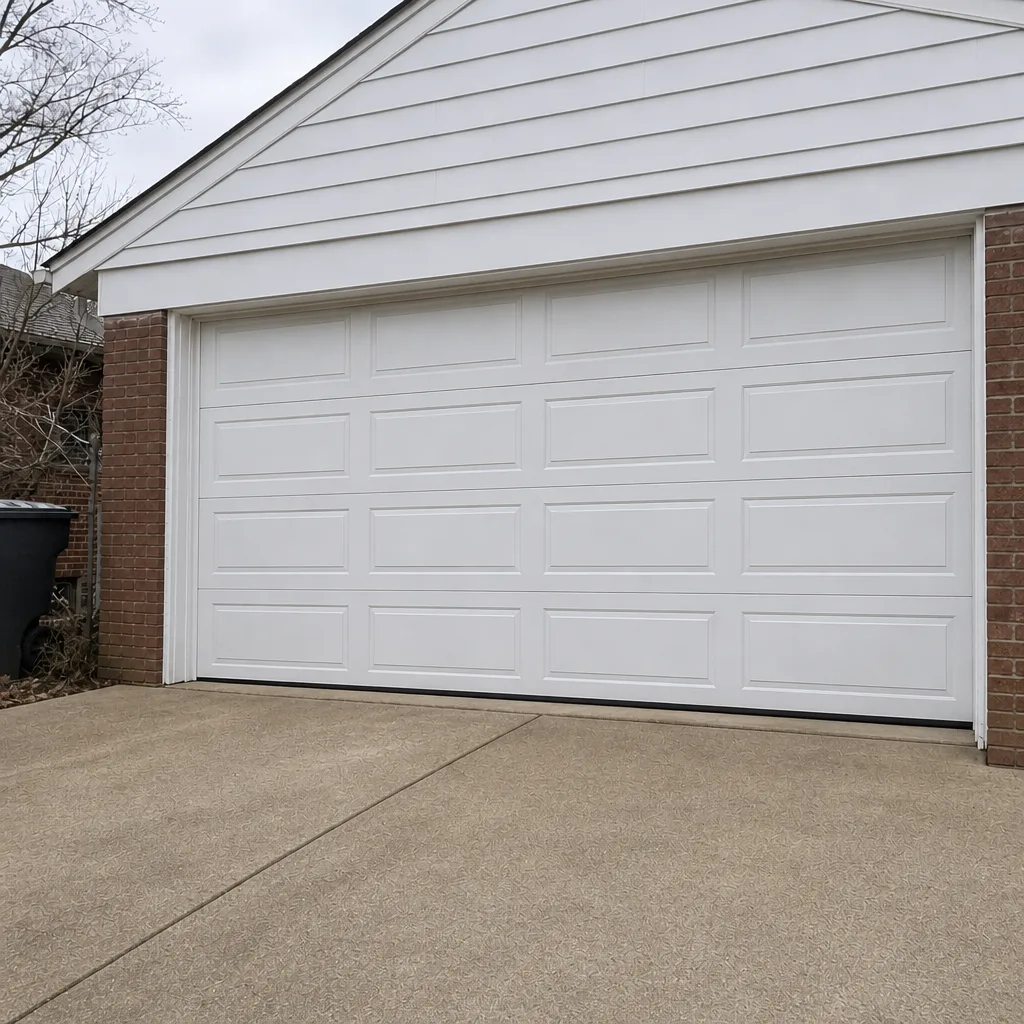 After
When to Call a Professional
Call a professional when the job involves a torsion or extension spring, cable, drum, structural header, or electrical wiring in the opener. Those are the categories where a mistake can injure someone, damage the door, or create a maintenance-history problem with your insurer. Call a professional if you’re not sure what’s wrong, if the door is binding or crooked after a simple adjustment, or if the door is aging and one repair keeps leading to another. Also call if you rent the property or manage it. In Wilmington, our team offers free estimates, and we’re available for emergency garage door service when a stuck door can’t wait. Call (877) 492-2046 and we’ll tell you honestly whether it’s a repair or replace situation, and quote you a price before any work begins. Estimates are free.
Frequently Asked Questions
No. A torsion or extension spring stores enough energy to cause serious injury in under a second, and a winding bar slipping out of a loaded spring is one of the most common ways homeowners get hurt. Spring work requires specialized tools, training, and discipline that most DIYers don’t have. Call (877) 492-2046 for a free estimate on a proper spring replacement.
It depends on the job. Small tasks like weatherstripping and lubrication are inexpensive; spring replacement, cable work, and panel replacement cost more. A single torsion spring is priced per spring, and a matched pair (which is often replaced together) costs about twice the single-spring figure. We quote every job in writing before work starts, so the estimate we give you is the price you pay. Call (877) 492-2046 for an exact figure.
No. The written estimate we give you is the price you pay. We quote and agree on the price before any work starts. If we find something during the job that genuinely changes the scope, we’ll tell you first and get your agreement before touching anything. That’s the only way the price changes.
Weatherstripping, bottom seals, opener remote programming, lubrication, and visual inspection are all reasonable DIY tasks. These are low-energy jobs with basic tools. Track adjustment and panel dent repair are judgment calls. Springs, cables, drums, and structural header work are never-DIY.
Sometimes, and only on small jobs. Once you count the cost of tools you’d buy for this one job, the time you spend, and the chance your first attempt doesn’t take, the savings on spring or cable work evaporate. The cheap, low-energy tasks are where DIY actually saves money. The expensive jobs are where the injury and reinstatement risk lives.
Yes. Our technicians handle the door itself and the opener, so you don’t need to source separate contractors. We’re trained to service eight major brands: LiftMaster, Chamberlain, Genie, Clopay, Amarr, Wayne Dalton, Craftsman, and Raynor. One call covers the job.
The local professional we connect you with is licensed and insured as their state requires. That matters for the door’s maintenance history: our work is documented so you have a clean record if an insurer ever asks. Call (877) 492-2046 to book a free estimate.
Check the opener first: is the motor running? If the motor is silent, check the power and the safety sensor. If the door is dead weight and won’t lift, or the motor runs but nothing moves, that’s likely a spring or opener issue. Don’t try to force it. Call (877) 492-2046 and we’ll book you in.
The Bottom Line
The DIY vs professional decision on a garage door isn’t really a single choice. The right answer depends on the task. Weatherstripping, seals, remote programming, and lubrication are genuine DIY savings for a confident Wilmington homeowner. Springs, cables, drums, structural header work, and electrical opener wiring are the jobs where DIY costs more than it saves, whether in tools, time, injury risk, or maintenance-history problems. Read the symptoms, check the tool list, and call when you’re at the edge of your comfort zone. Our team can repair and install, so one call covers the whole decision.
Wilmington Garage Door Repair Pros offers free estimates on every job, and we’re available for emergency garage door service. Call (877) 492-2046 to schedule a visit, and we’ll give you an honest answer on repair or replace.
If you want to see the full range of what we handle, start at Wilmington Garage Door Repair Pros and we’ll point you to the right service.
Written by the team at Wilmington Garage Door Repair Pros.