Last updated November 21, 2026
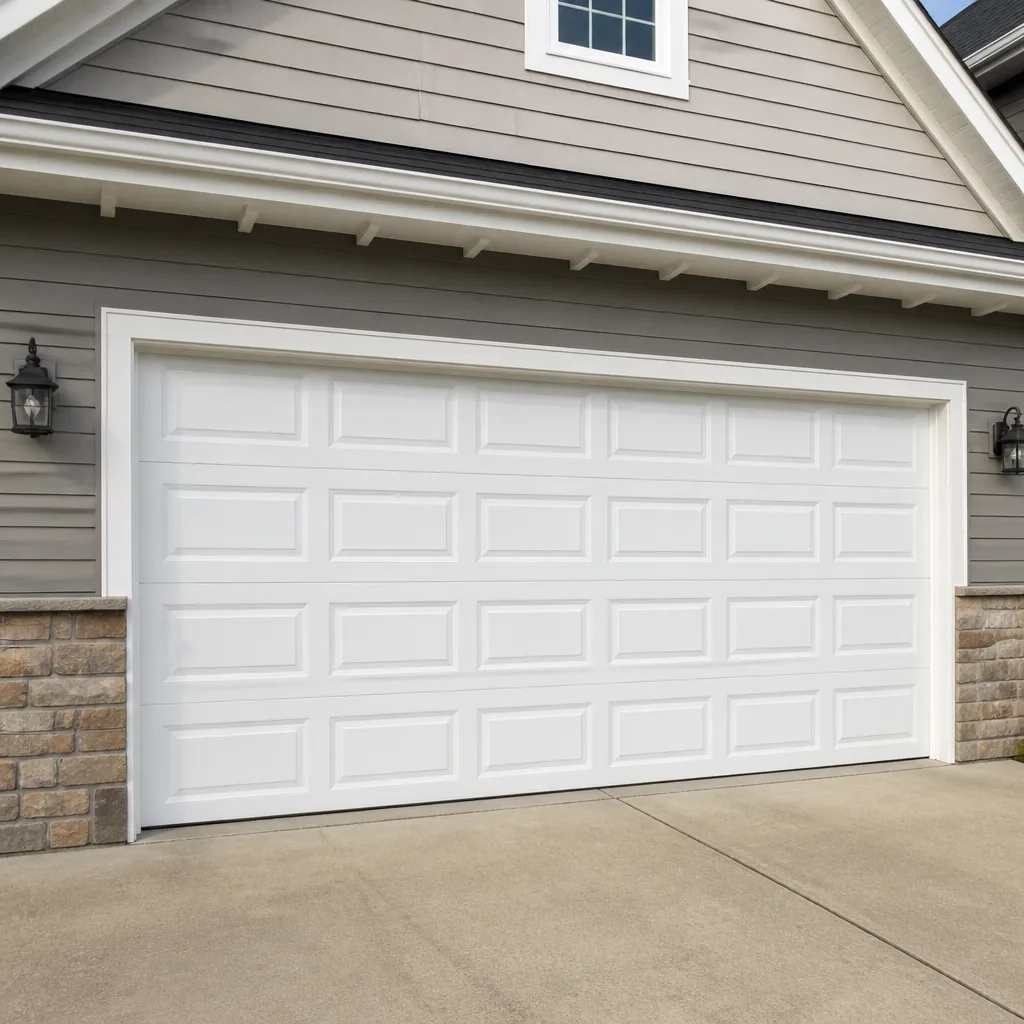 Raised-panel steel
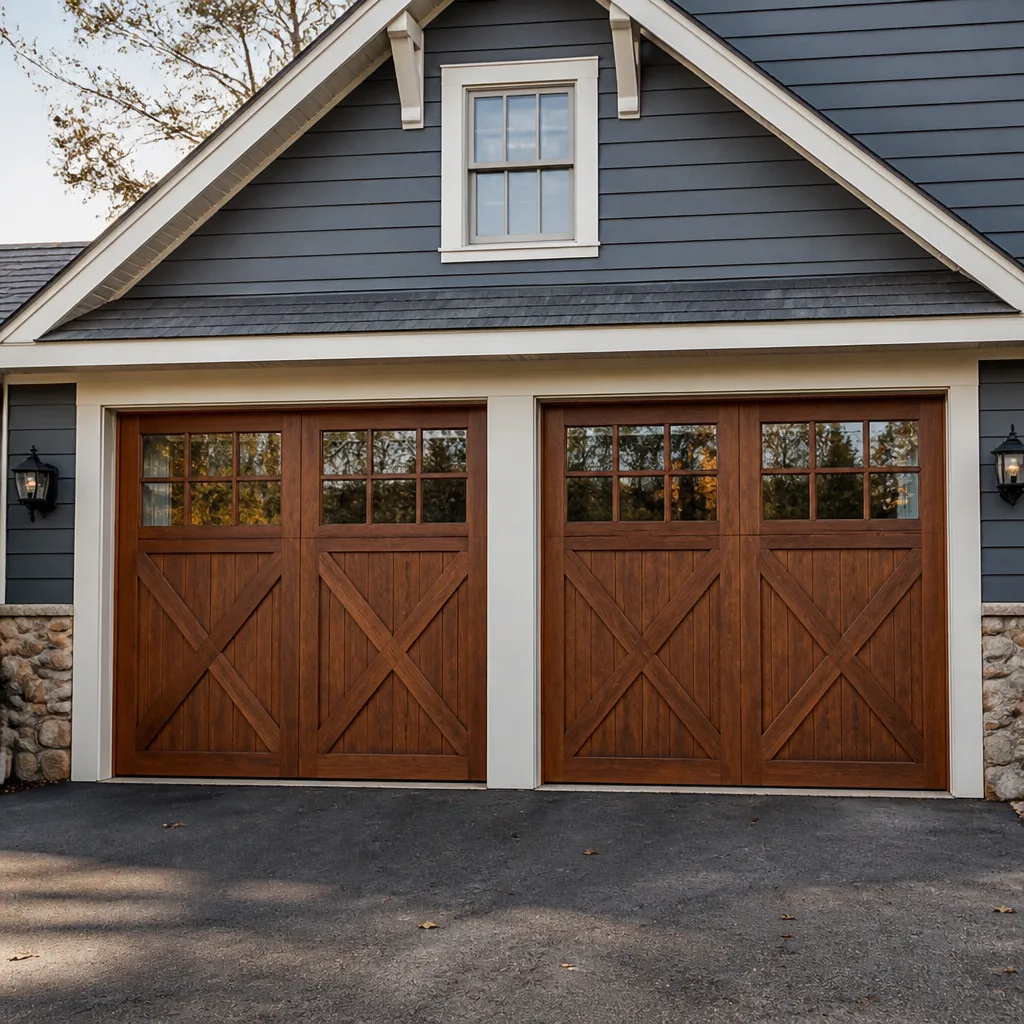 Carriage house
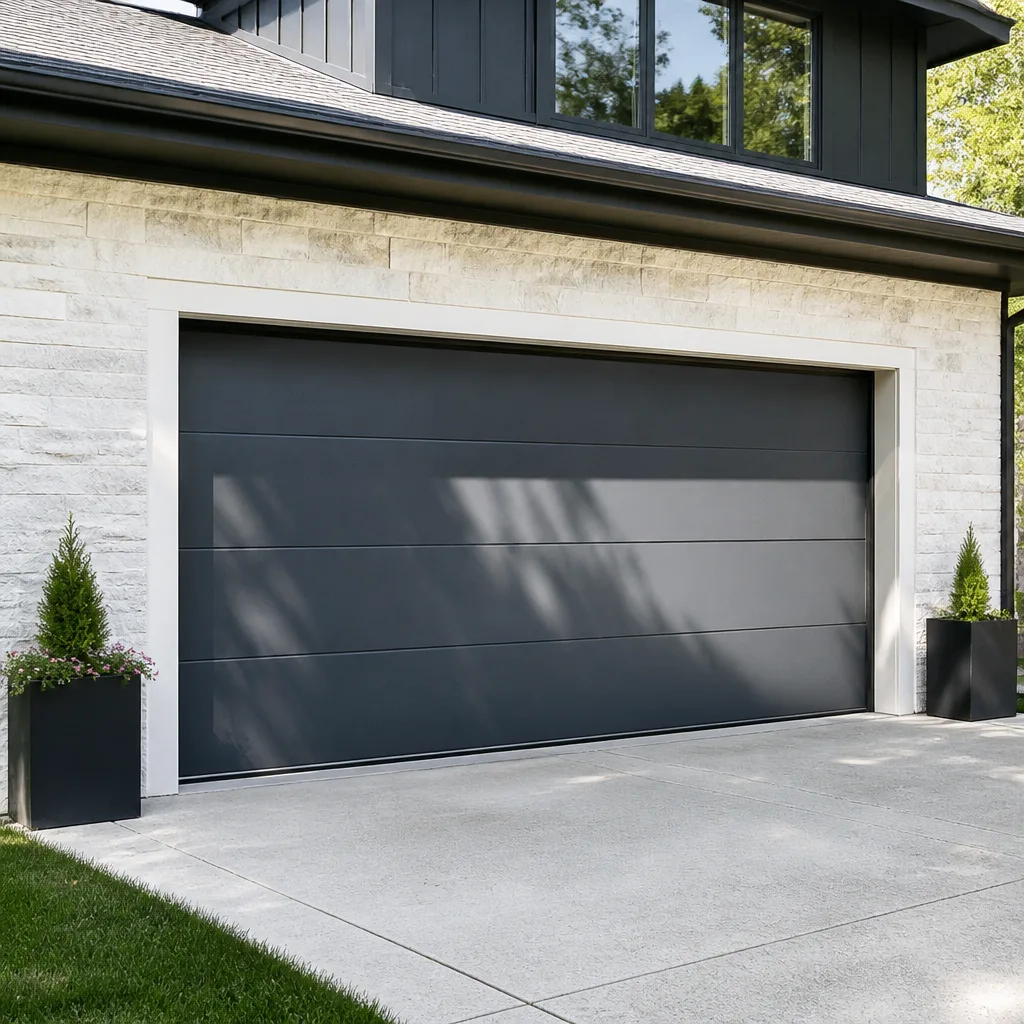 Modern flush
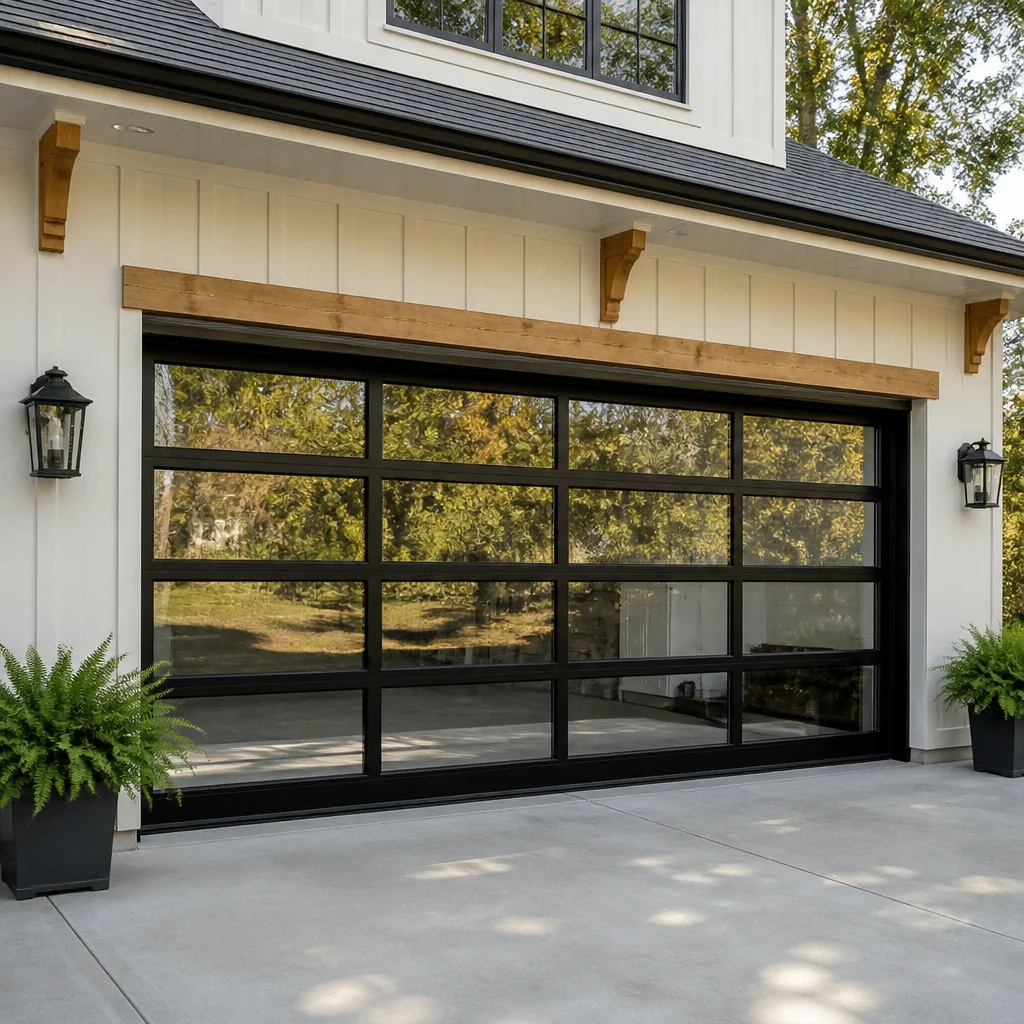 Full-view glass
 LiftMaster openers
 Chamberlain openers
Full 25-point door and opener safety check with every visit - springs, cables, rollers, tracks, and your LiftMaster or Chamberlain opener included
You get a price before we start. It does not change when the pro arrives.
Get your free estimateGarage Door Warning Signs: A Wilmington Homeowner’s Reference Guide
Most garage door warning-sign guides read like a list of noises. Ours works backward. A garage door that hesitates for two seconds before it moves isn’t “just getting old” – it’s one of the most reliable early indicators of a torsion spring that’s lost 20-30% of its tension, and it usually gives you 60-90 days before it snaps completely. That two-second pause is a symptom; the spring is the cause. In this guide we map the most common symptoms Wilmington homeowners describe to the mechanical problem behind each one, so you can tell the difference between a forty-dollar fix and a four-hundred-dollar one before you call anyone. We’ll cover sound, sight, and opener behavior, and show you which signs you can monitor and which mean stop using the door today.
Quick Answer
A hesitating, grinding, or slow-moving garage door usually signals a mechanical problem you can fix for far less than a full replacement – worn rollers, a stretched spring, or a misaligned track rather than a failing door itself. In Wilmington, the signs to act on fastest are a door that reverses without warning, a cable hanging loose, or a spring that has clearly snapped, because those point to a component that can fail completely or drop the door. The good news is that most warning signs are catchable: identifying them early is the difference between a small repair and a door that stops working altogether.
Styles & brands we work with
- Raised-panel steel
- Carriage house
- Modern flush
- Full-view glass
- LiftMaster openers
- Chamberlain openers
Table of Contents
- The Symptom-to-Cause Diagnostic Tree
- Reading the Three Sounds That Matter
- Visual Signs Worth Checking in Wilmington
- What Your Opener Is Telling You
- Spring Warning Signs and the 60-90 Day Window
- The Signs Homeowners Ignore Until the Door Fails
- Monitor, Schedule, or Emergency: Sorting by Urgency
The Symptom-to-Cause Diagnostic Tree
When a door misbehaves, start with what you can observe and work back to the part most likely responsible. This is how a technician thinks on arrival, and you can run the same logic at the kitchen counter. The goal isn’t to self-diagnose a repair – it’s to know whether you’re looking at something minor or something that needs a callback today.
Here’s the tree we walk in our heads, from symptom to likely cause to rough urgency tier:
- Door hesitates briefly before moving. Most likely a torsion spring that has lost tension. Tier: schedule soon, monitor weekly.
- Loud grinding or squealing while moving. Worn rollers or dry hinges. Tier: monitor, lubricate and inspect; schedule if it persists.
- A popping or snapping sound, then door won’t lift. Cable under tension or a spring that just failed. Tier: emergency – stop operating the door.
- Door looks crooked, one side lower. A stretched cable or a broken spring on one side. Tier: schedule promptly.
- Door scrapes against the frame. Panel or track misalignment. Tier: schedule; stop if it binds hard.
- Door reverses without hitting anything. Opener safety sensor or logic fault, sometimes a binding door the opener reads as an obstruction. Tier: schedule, and it can be an emergency if the door won’t close.
That framework alone filters out half the guesswork. A grinding door and a snapping door both sound alarming, but one is a wearable part and the other is a component that can send the door crashing down. In Wilmington, this distinction decides how fast you call – and whether you use the door at all in the meantime. If you’ve already confirmed a failed component, our garage door repair team can tell you over the phone whether it’s a stop-now situation.
Reading the Three Sounds That Matter
Three sounds account for most of the garage door complaints in Wilmington, and each points to a different part of the system. Learning to tell them apart keeps you from treating a worn roller like a broken spring.
Grinding. A steady metal-on-metal grind as the door travels usually means worn rollers or dry hinges – the steel bodies and sealed bearings ride rough in the track. Rollers are among the cheapest parts to replace, and a grinding door that’s left alone wears down the track as well, which turns a small job into a bigger one. Tier: monitor and schedule.
Popping. A sharp pop or bang, especially right as the door starts to lift or lower, points to a cable under tension or a spring unwinding. That is not a sound to shrug off. If it’s accompanied by a sudden bang and the door stops working, you’re almost certainly looking at a failed spring or cable. Tier: emergency. Do not force the door.
Scraping. A rhythmic scrape or squeal that tracks the door’s edge against the frame usually means the panel or track has shifted out of alignment. It can start after a door takes a bump, or simply as the tracks loosen over time. Tier: schedule; stop using the door if it binds so hard it won’t travel cleanly.
We work on nearly every major brand – Wayne Dalton, Craftsman, Raynor, LiftMaster – so the specific make on your door rarely changes the diagnosis. The sound does. If you can describe what you hear and when it happens, you’ve already done half the work.
Visual Signs Worth Checking in Wilmington
Some of the most important warnings are visible without ever operating the door. Walk around the inside of the garage and look closely at the hardware. Wilmington’s swings between humid summers and cold winters put stress on metal, and knowing which patterns are routine versus which mean water is getting in saves you from replacing parts that are fine.
- Rust at the pivot points and hinges. A little surface oxidation is normal. Rust concentrated at specific joints, or along the bottom of the panels, is a water-infiltration tell – rain blowing in past a worn bottom seal, or a door that doesn’t sit flush.
- Fresh rust on the spring and cables. These carry the door’s full weight. Rust that shows up quickly or looks pitted means moisture is reaching them, and pitted cables are weaker.
- Hanging or slack cables. A cable that has slipped off its drum or hangs loose is a genuine emergency – stop using the door.
- Daylight along the bottom edge. A visible gap means the bottom seal has failed. It lets in water and pests and points to weatherstripping that needs replacing.
- Bent vertical or horizontal track. A kink in the track will eventually derail a roller. Look at the track to see if it’s straight and the rollers sit fully inside.
- Door panels out of line. Standing back, the horizontal lines of the panels should be level. A sagging or tilted door usually means one spring or one cable has given up its share of the load.
Treat the rust reading this way: a scatter of surface rust is cosmetic, but rust that appears suddenly on a specific joint or on the load-bearing hardware is a moisture clue, and moisture on springs and cables matters. Check the door on a calm day after rain to spot the difference. A door that sits level and seals well will rust slowly; one that doesn’t will rust at the same suspicious spot every season.
What Your Opener Is Telling You
Your opener is a diagnostic tool as much as a convenience. It senses resistance, so the way it behaves often points straight to the door’s mechanical condition. Intermittent reversals, slow travel, and mid-cycle stops each tell a different story.
Intermittent reversals. The door goes down, then stops and reverses as if it hit something. Sometimes that’s the safety sensor – misaligned, dusty, or a light bulb the wrong wattage confusing the circuit. But it can also be the opener reading real resistance from a binding door: a stiff roller or a track that’s out of line. Look at the door first; if it moves freely by hand (with the opener disengaged, never by force), the problem is likely the opener or sensor.
Slow travel speed. The door suddenly crawls where it used to glide. That often means the opener is straining against added resistance from the door hardware, or the force settings have drifted. A door that needs its opener to push harder than it used to is telling you the door has a mechanical problem.
Mid-cycle stops. The door halts partway and stays put. On older units this can be a logic board fault or a limit switch that needs setting. On newer LiftMaster and Chamberlain units it can be a safety-reversal system reading a fault. Either way, a door stuck open or partway down is a security problem as much as a repair, so it’s worth a call.
Because we handle the opener and the door together, we can separate the two on the first visit. If the drive system is the culprit, our garage door opener repair covers the unit and its sensors; if it’s the door binding, that’s a hardware job. One call, one diagnosis.
Spring Warning Signs and the 60-90 Day Window
Springs are the components that matter most, and the ones most homeowners misread. There are two types – the horizontal torsion spring on a shaft above the door, and the vertical extension spring along the sides – and each fails differently. But both give warning before they let go, if you know the signs.
- The hesitation. The door pauses a beat before it lifts. That’s lost tension – often 20-30% – and it’s the clearest early signal.
- The heavy open. You notice the door feels heavier when you lift it by hand with the opener disengaged. That added weight is a spring doing less of its job.
- The uneven lift. One side rises faster than the other, or the door looks crooked mid-travel. On extension-spring doors that usually means one spring has stretched.
- The period of quiet. After those signs, a spring can hold for weeks and then go without another warning. That’s the window – typically 60-90 days from the first hesitation to a complete failure.
A spring is under immense stored tension, and when it fails it releases energy violently. This is not a part to inspect up close, lubricate by hand, or attempt to replace yourself – a snapped spring or a cable that lets go can cause serious injury, and the tools and training for the job aren’t sold at a hardware store. If you suspect a failing spring, treat the door as unsafe until a trained professional looks at it. Our garage door spring repair is built around exactly this job, and it’s one we’d rather you call earlier than later. A note on pricing: when one spring is replaced the range covers a single spring, and because the springs on a two-spring door are usually replaced as a matched pair, a pair costs about twice that. Call (877) 492-2046 for a free estimate and we’ll tell you which you’re looking at.
The Signs Homeowners Ignore Until the Door Fails
Some warnings are quiet and easy to live with, which is exactly why people live with them until the door stops. Here are the ones we see homeowners ride past most often – and what they tend to become.
The two-second pause. People assume it’s a tired door. It’s tension loss, and it means a spring failure is on the way. The consequence of ignoring it is the one failure that can bring the door down hard while someone is under it.
The grinding that “still works.” Worn rollers keep moving long after they should be replaced. The grind wears the track and stresses the hinges, so a cheap parts swap becomes a track repair.
The crooked door. A door that’s slightly off-level still closes, so it gets ignored. But an uneven door puts extra strain on the opener and the remaining spring, shortening the life of both.
The loose hinge or rattling bolt. Loose hardware works itself looser. What’s a tighten-up today becomes a bent track or a dropped roller later.
The daylight gap. Easy to walk past. It admits water at the bottom of the door, which is where rust and seal damage start.
The opener that “acts up sometimes.” Intermittent reversals get blamed on the remote. Often they’re a sensor or a binding door, and the intermittent fault becomes a door that won’t close at all. Ignoring the door’s behavior is exactly the pattern that turns a small fix into an emergency – which is why our Wilmington Garage Door Repair Pros team treats the “still works” cases seriously when you call.
Monitor, Schedule, or Emergency: Sorting by Urgency
Not every warning sign needs a same-day call, and part of the value of knowing the causes is knowing when to relax. Sort what you’ve found into three tiers.
Monitor. Surface rust on a hinge, a squeak you can live with, a door that’s slightly stiff. These are worth watching and lubricating, and worth mentioning at a service call – but they don’t stop the household. Keep an eye out for them changing.
Schedule. Hesitation, grinding that persists, a crooked door, a slow opener, a visible daylight gap, a bent track. These are all cheaper to fix before they cascade. Call and book a service visit rather than letting them run for months.
Emergency. A snapped spring, a hanging or slack cable, a door that won’t close, a door that drops, a popping bang followed by a dead door. In these cases stop using the door immediately, keep clear of the moving parts, and call for emergency garage door service. A stuck door doesn’t wait for Monday morning, and neither should you.
When you can name the symptom and you’ve sorted it into a tier, the conversation with a technician is short and useful. Our technicians have up to 10 years of experience diagnosing across LiftMaster, Chamberlain, Genie, Clopay, Amarr, Wayne Dalton, Craftsman, and Raynor equipment, so the diagnosis on the first visit normally holds regardless of the make.
Common Mistakes to Avoid
- Assuming “still works” means “still fine.” A grinding door or a hesitating one works until it doesn’t. Treat warning signs as early notice, not noise.
- Trying to fix a spring or cable yourself. The stored tension in these parts is genuinely dangerous. Leave spring and cable work to a trained professional and treat a suspected spring failure as an emergency.
- Forcing a door that’s jammed or crooked. Pushing a stuck door can bend the track and bend the panels – turning a repair into a replacement. Stop and call.
- Greasing the wrong things. A little lubricant on hinges and rollers helps; a lot on the track or on the spring doesn’t, and can attract dirt that makes things worse.
- Ignoring the opener’s behavior. Reversals and mid-cycle stops are clues about the door’s condition, not just the remote. Diagnose the door first.
- Assuming rust means replacement. Surface oxidation is cosmetic. It’s rust that appears suddenly on load-bearing hardware that tells you something is wrong; a technician can tell the difference.
- Waiting for a full failure to call. The spring window, the worn roller, the daylight gap – all of them are cheaper caught early. A warning sign is a chance to fix small.
See the difference
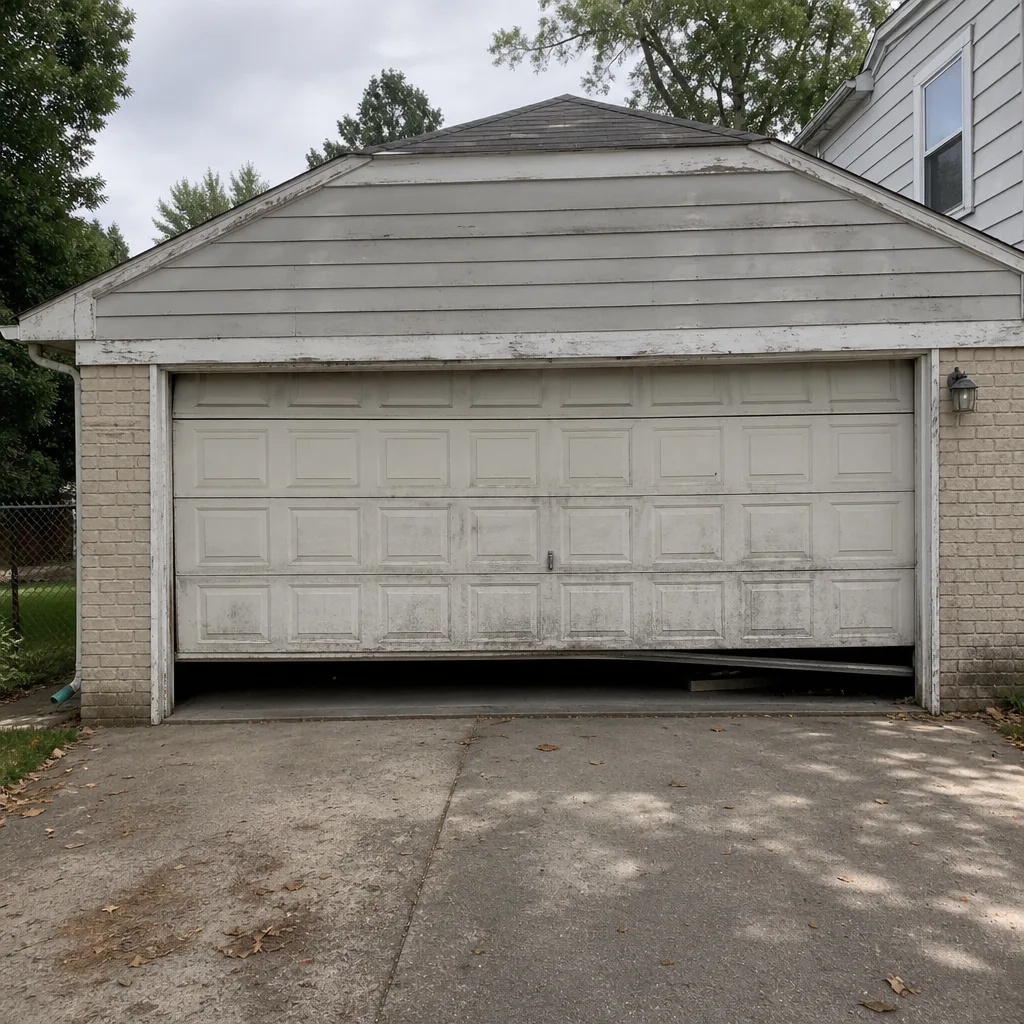 Before
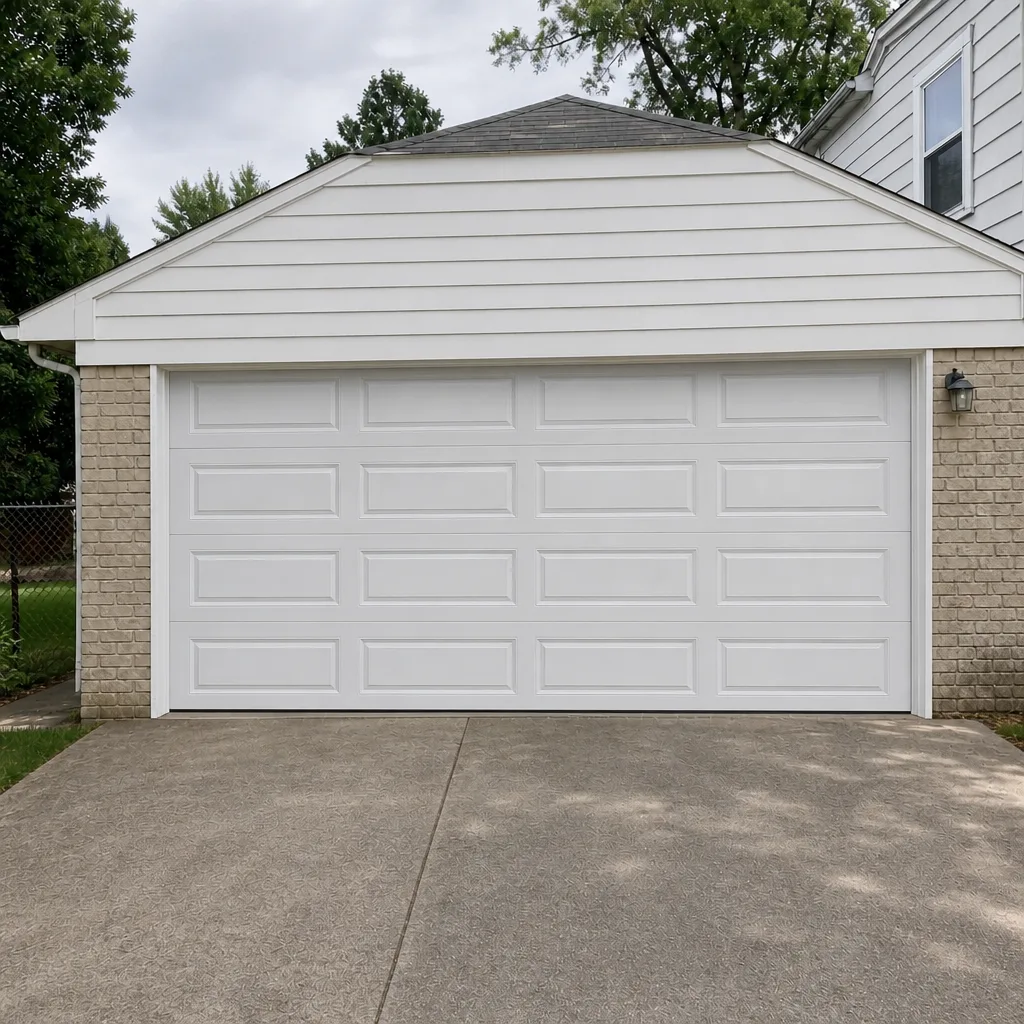 After
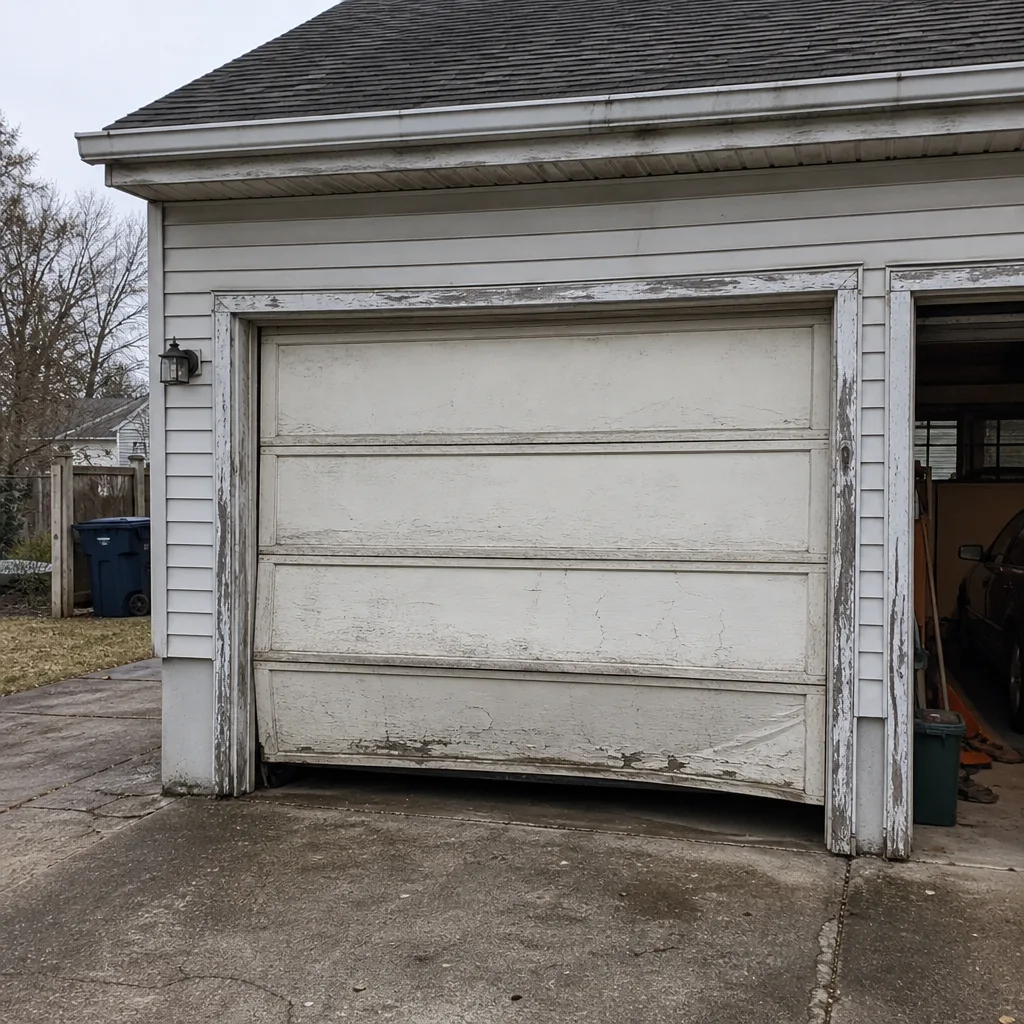 Before
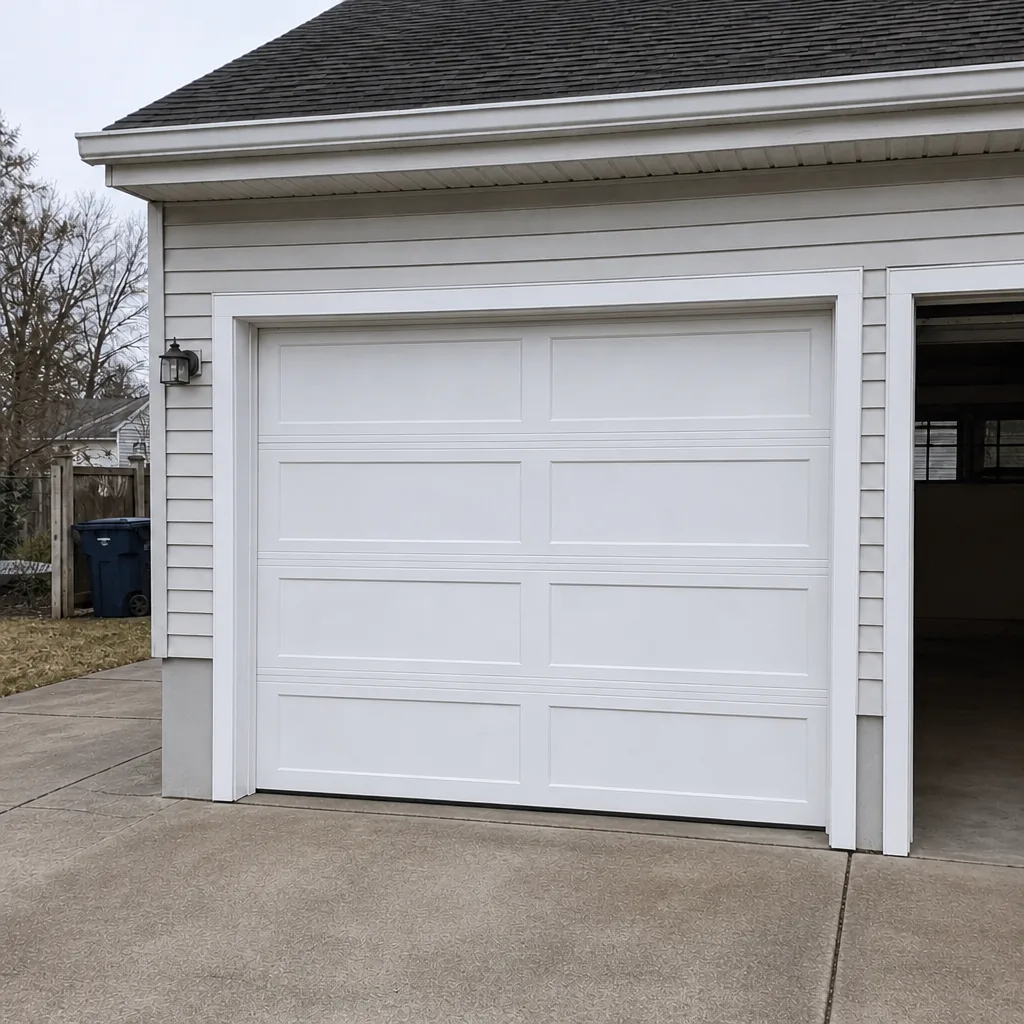 After
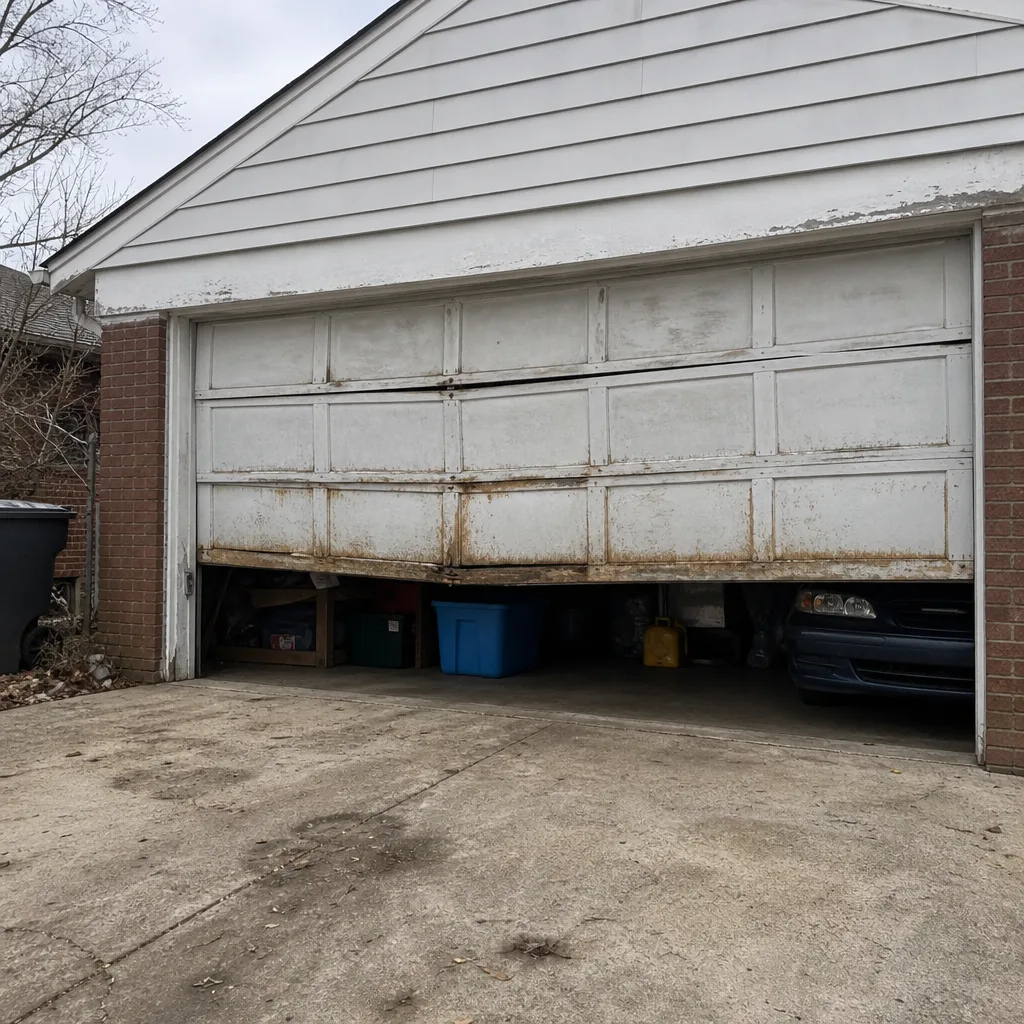 Before
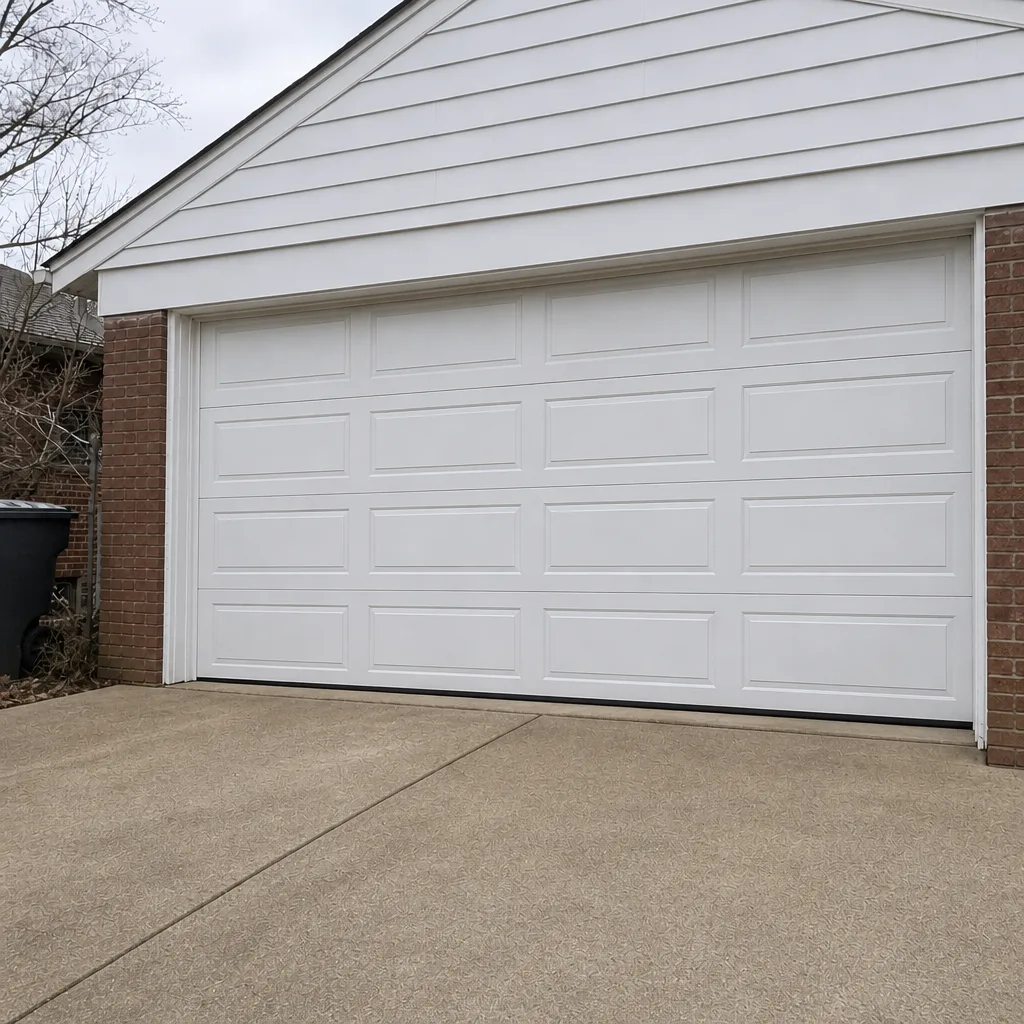 After
When to Call a Professional
Call when the door hesitates before lifting, when it grinds or scrapes, when it looks crooked, when the opener reverses or stops mid-cycle, or when you see hanging cable, a snapped spring, or daylight along the floor. Call sooner if the door won’t close, drops, or makes a popping bang – those mean stop using it. The line between a monitor-and-wait sign and a schedule-a-visit sign is often the line between a small repair and a bigger one, and an experienced technician can tell them apart on the first visit. Wilmington Garage Door Repair Pros offers free estimates in Wilmington – call (877) 492-2046 and describe the symptom. We’ll tell you whether it’s a forty-dollar fix or a four-hundred-dollar one, and we quote the price before any work starts.
Frequently Asked Questions
The clearest early sign is a door that hesitates for a second or two before it lifts, which usually means the spring has lost 20-30% of its tension and typically leaves you 60-90 days before it fails. A door that feels heavier by hand, or looks uneven as it rises, points the same way. Call (877) 492-2046 for a free estimate before it gets to a full failure.
Worn rollers give a steady grind that travels the whole door, while a bent track tends to cause a catch or scrape at one spot as the rollers pass. Either is worth having checked before the wear spreads. Call (877) 492-2046 and we’ll help you sort which you’re hearing – estimates are free.
Intermittent reversals are usually a misaligned or dusty safety sensor, or sometimes the opener reading real resistance from a binding door. Check that the sensors are aimed at each other and clean first. If it keeps reversing, the door’s hardware is the next thing to inspect – call (877) 492-2046 for a diagnosis.
Usually not, but it’s a schedule-it-now sign rather than a live-with-it sign. A door that’s crooked because a spring or cable has stretched is under uneven load and strains the opener and the remaining spring. The emergency version is a door that won’t close, drops, or has a hanging cable – stop using it and call (877) 492-2046.
Rarely. Most warning signs – hesitation, grinding, misalignment, a slow opener – point to wearable parts like springs, cables, rollers, or tracks, not to a failing door. Repair is usually the answer, and we’ll give you an honest repair-versus-replace answer either way. Call (877) 492-2046 and we’ll quote before any work begins.
The rust that matters is rust that appears suddenly on load-bearing hardware – springs, cables, hinges – or along the bottom of the panels, since that usually points to water getting in past a worn seal. Scattered surface oxidation is cosmetic. If you’re not sure which you have, a technician can tell on sight; call (877) 492-2046 for a free estimate.
The Bottom Line
The most useful thing to know about garage door warning signs is what they point to, not just that something sounds wrong. A pause is a spring losing tension; a grind is a roller wearing; a scrape is a track out of line; a reversal is a sensor or a binding door. When you can map the symptom to the cause, you can sort it into monitor, schedule, or emergency – and you can tell a forty-dollar fix from a four-hundred-dollar one. In Wilmington, spot the early signs, treat a spring as off-limits for DIY, and call when the tier says call.
Ready to stop guessing? Call (877) 492-2046 for a free estimate. Describe what you’re hearing or seeing, and our team will tell you whether to monitor, schedule, or act today.
Written by the team at Wilmington Garage Door Repair Pros.